-
Follow Us On:
-
-

Abdominal Vessels
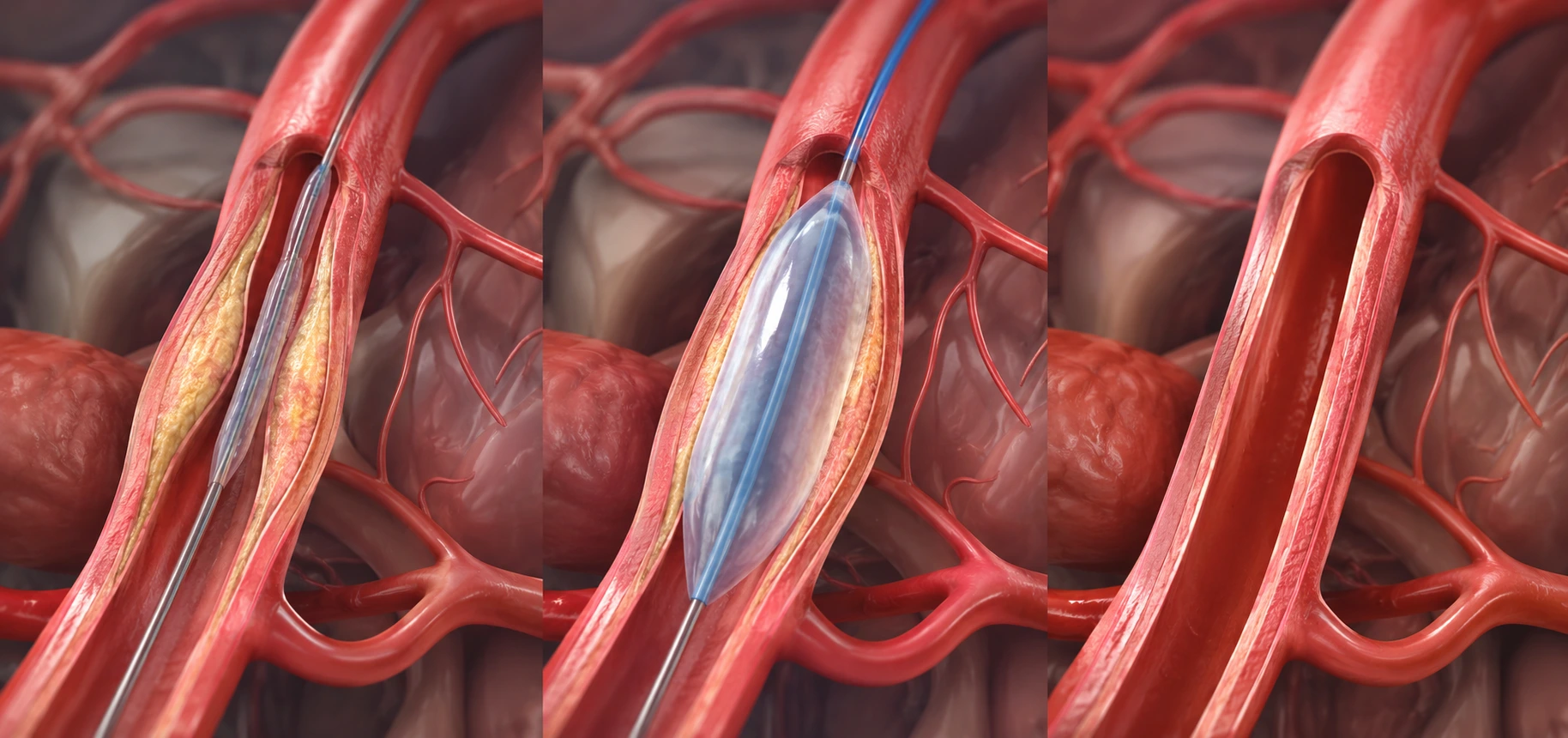
Abdominal Vessels
Abdominal vessel angioplasty is used to treat narrowing in major abdominal arteries when blood flow to important organs is compromised or symptoms suggest significant vascular disease.
What Abdominal Vessels Involves
-
Specialised imaging identifies which abdominal artery is narrowed and how severe the blockage is.
-
Balloon angioplasty and stenting may be used to improve organ blood supply when indicated.
-
Planning depends on symptoms, organ risk, vascular anatomy, and associated disease burden.
-
The goal is to restore safer circulation while reducing ongoing vascular complications.
When Abdominal Vessels May Be Recommended
-
Patients with abdominal vascular narrowing causing pain, poor organ circulation, or progressive vascular symptoms.
-
People whose scans show important stenosis in abdominal arterial branches.
-
Cases requiring minimally invasive treatment after careful vascular assessment.
-
Patients in whom improved blood flow may help protect organ function.
Who May Benefit From Abdominal Vessels
-
Individuals with diffuse atherosclerosis, smoking history, or diabetes.
-
Patients with unexplained abdominal vascular symptoms needing specialist evaluation.
-
People whose imaging findings suggest clinically relevant abdominal vessel disease.
-
Patients selected for catheter-based improvement of abdominal arterial circulation.
Benefits of Abdominal Vessels
-
Supports timely treatment before circulation or heart function worsens.
-
Can improve symptoms, daily comfort, and overall recovery planning.
-
Helps reduce the risk of future cardiac or vascular complications.
-
Offers a structured path toward safer follow-up and better long-term outcomes.
Book a Abdominal Vessels Consultation
Consult our cardiology team to understand whether Abdominal Vessels is right for your condition. Timely planning helps improve treatment outcomes, reduce complications, and support smoother recovery and follow-up.
Dr Sandeep's Heart Care Center & Labs is located in Basaveshwaranagar and is easily accessible for patients travelling from Rajajinagar, Vijayanagar, Magadi Road,Malleshwaram, Mahalakshmipuram, Mahakashmi Layout, Peenya, Yeshwanthpur, Nandini Layout, Dasarahalli and surrounding areas who are looking for a cardiologist for ongoing heart disease management, BP control, or preventive cardiac care.
Frequently Asked Questions
What is abdominal vessel angioplasty?
Abdominal vessel angioplasty is a catheter-based procedure that may be used for selected cases of narrowing in the arteries supplying the abdominal organs, most commonly the mesenteric or visceral arteries. It aims to improve blood flow using a balloon and, when needed, a stent.
Which abdominal arteries can be treated with angioplasty?
Several abdominal arteries can potentially be treated, most often the mesenteric and visceral arteries that supply the intestines and other organs. Renal artery narrowing is a related but separate condition, with its own distinct evaluation and treatment approach.
What causes abdominal artery narrowing?
Abdominal artery narrowing is most often caused by atherosclerosis, a buildup of fatty plaque within the artery wall. Risk factors such as smoking, diabetes, high cholesterol, and hypertension can contribute, though having a risk factor does not mean severe disease will necessarily develop.
What symptoms can abdominal artery disease cause?
Symptoms depend on which specific artery is affected. Mesenteric artery narrowing, for example, may in some cases relate to abdominal discomfort after eating, while other abdominal arterial narrowing may be found incidentally during imaging for another reason, without clear symptoms.
How is abdominal vascular disease diagnosed?
Diagnosis typically involves a clinical assessment along with imaging such as Doppler ultrasound, CT angiography, or MR angiography, and sometimes catheter angiography when clinically indicated. These diagnostic steps are separate from any treatment decision.
Is abdominal vessel angioplasty suitable for every blocked abdominal artery?
No. Suitability depends on which artery is affected, the severity and location of the narrowing, associated symptoms, and your overall vascular risk profile, assessed individually by a specialist.
Is angioplasty always better than surgery for abdominal artery blockages?
Not universally. Angioplasty, surgical treatment, and medical management are different approaches, each suited to different situations depending on the artery involved, the extent of disease, and your overall health — decided through specialist assessment.
What follow-up is needed after abdominal vessel angioplasty?
Follow-up generally includes monitoring for symptom changes, management of vascular risk factors such as cholesterol and blood pressure, and periodic review with your specialist to assess how the treated artery and surrounding circulation are functioning.
.png)