-
Follow Us On:
-
-

CRT / Combo Device
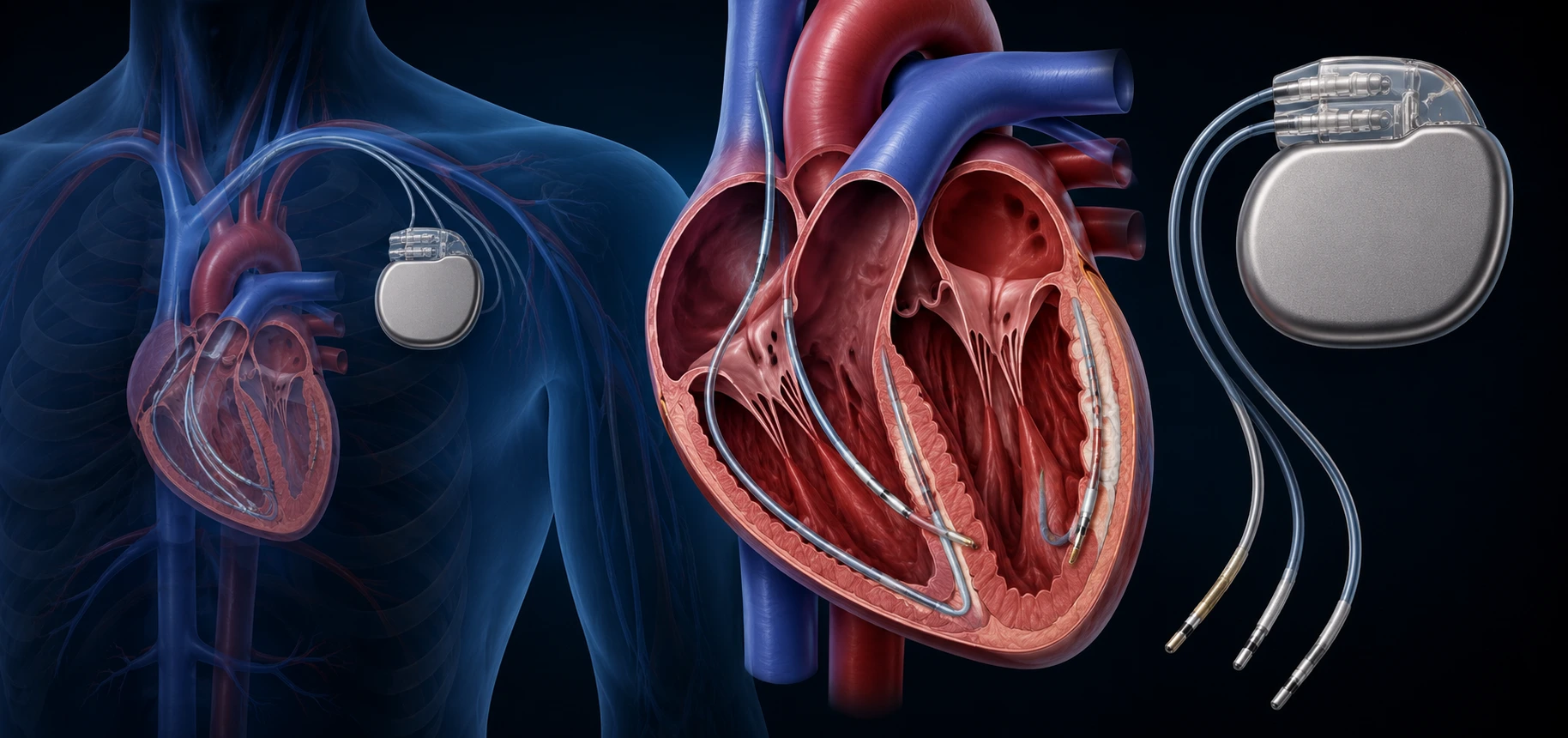
CRT / Combo Device
CRT, or Cardiac Resynchronization Therapy, helps coordinate the pumping action of the heart in selected heart failure patients, and combination devices may also include defibrillator protection.
How CRT / Combo Device Helps
-
The device improves timing between the heart chambers to support more efficient pumping.
-
It is considered when heart failure symptoms continue along with conduction delay or dyssynchrony.
-
Some patients need a combo device that offers both resynchronization and defibrillator capability.
-
Treatment planning depends on ECG pattern, heart function, symptoms, and overall risk profile.
Who May Need CRT / Combo Device
-
Patients with heart failure and reduced pumping function despite guideline-based medicine.
-
People with electrical dyssynchrony such as broad QRS patterns on ECG.
-
Cases where better chamber coordination may improve symptoms and reduce admissions.
-
Patients who may benefit from combined pacing and shock protection.
What to Expect With CRT / Combo Device
-
Implantation is followed by careful device optimisation and regular review.
-
Patients are monitored for change in symptoms, exercise capacity, and fluid status.
-
Follow-up includes rhythm checks, lead review, and adjustment of heart failure therapy.
-
Long-term success depends on coordinated device care and continued medical management.
Benefits of CRT / Combo Device
-
Provides continuous support for heart rhythm or pumping function.
-
Reduces the risk of serious rhythm-related complications in suitable patients.
-
Improves confidence with regular monitoring, checks, and planned follow-up.
-
Supports better long-term heart performance and quality of life.
Book a CRT / Combo Device Consultation
Consult our cardiology team to understand whether CRT / Combo Device is appropriate for your condition. Timely evaluation helps identify the right device plan, improve safety, and support better long-term heart function.
Dr Sandeep's Heart Care Center & Labs is located in Basaveshwaranagar and is easily accessible for patients travelling from Rajajinagar, Vijayanagar, Magadi Road,Malleshwaram, Mahalakshmipuram, Mahakashmi Layout, Peenya, Yeshwanthpur, Nandini Layout, Dasarahalli and surrounding areas who are looking for a cardiologist for ongoing heart disease management, BP control, or preventive cardiac care.
Frequently Asked Questions
What is Cardiac Resynchronization Therapy (CRT)?
CRT is a pacing therapy used in selected heart failure patients whose heart chambers contract out of coordination with each other, a condition called dyssynchrony. The device paces both ventricles together to help the heart pump more efficiently.
Who may benefit from CRT?
CRT may be considered for patients with heart failure symptoms that continue despite appropriate medication, reduced pumping function, and evidence of electrical dyssynchrony on an ECG, often shown as a widened QRS complex. Not every heart failure patient is a candidate — assessment is individualized.
What is the difference between CRT-P and CRT-D?
CRT-P provides cardiac resynchronization pacing only. CRT-D combines that same resynchronization function with an implantable defibrillator, which can also detect and treat dangerous fast heart rhythms. The choice between them depends on your individual arrhythmia risk, assessed by your cardiologist.
Is CRT the same as a regular pacemaker?
CRT devices are a specialized type of pacemaker, but their specific purpose is to coordinate the timing of contractions between the heart's chambers in selected heart failure patients, rather than simply pacing a slow heart rate as a standard pacemaker does.
What tests are done before CRT implantation?
Assessment typically includes an ECG to check QRS duration and rhythm, echocardiography to evaluate heart pumping function, and a review of your heart failure symptoms and response to medication, to determine whether CRT is likely to be beneficial.
Does CRT replace heart failure medication?
No. CRT is generally used alongside, not instead of, guideline-directed heart failure medication. Your cardiologist will continue to manage your medicines and lifestyle factors together with the device to support your overall heart failure treatment plan.
What happens after CRT implantation?
After implantation, the device is programmed and optimised for your individual rhythm and heart function. Follow-up visits monitor your symptoms, exercise capacity, and device performance, and your heart failure medication may be adjusted alongside device-based care.
What are the risks of CRT implantation?
Like other implantable cardiac devices, CRT implantation carries procedure-specific risks that vary by individual. Your cardiologist will discuss the specific risks and expected benefits relevant to your heart failure severity and overall health before proceeding.
.png)