-
Follow Us On:
-
-

ECG Test
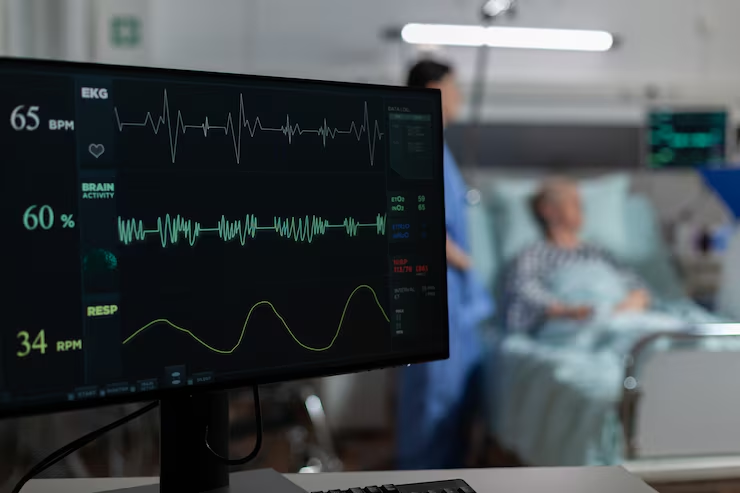
ECG Test (Electrocardiogram) in Basaveshwaranagar, Bangalore
An ECG, or electrocardiogram, is a quick, painless test that records the heart's electrical activity. A cardiologist may recommend it for chest pain, palpitations, dizziness or routine cardiac review. It is available at Dr Sandeep's Heart Care Center & Labs in Basaveshwaranagar, Bangalore, for patients from Vijayanagar and nearby areas.
What an ECG Test Evaluates
-
Records the heart's electrical pattern in a quick, non-invasive tracing.
-
Helps identify fast, slow, or irregular heart rhythm changes and conduction delays.
-
Can show evidence of heart strain, ischemia, prior heart damage, or chamber enlargement.
-
Commonly used as a first-line cardiac test in patients with chest pain, palpitations, dizziness, or fainting.
When an ECG Test Is Recommended
-
Chest pain, palpitations, breathlessness, dizziness, fainting, or unexplained weakness.
-
High blood pressure, diabetes, or known heart disease needing baseline rhythm assessment.
-
Pre-procedure, pre-surgical, or routine heart review when rhythm status matters.
-
Urgent evaluation when a heart attack or unstable rhythm is suspected.
Who May Benefit From an ECG Test
-
Patients with symptoms suggesting rhythm or circulation-related heart problems.
-
Individuals who need a simple baseline heart test during cardiac follow-up.
-
People with abnormal pulse, dizziness, recurrent palpitations, or fainting episodes.
-
Patients whose medicines or long-term conditions may affect heart rhythm.
Benefits of an ECG Test
-
Supports clearer diagnosis and more confident treatment decisions.
-
Helps identify heart problems earlier, before symptoms become serious.
-
Reduces uncertainty when chest pain, breathlessness, or palpitations need explanation.
-
Guides follow-up care, medication changes, and further cardiac testing when needed.
Book an ECG Evaluation
Consult Dr Sandeep's Heart Care Center & Labs to know whether an ECG test is the right next step for your symptoms or ongoing heart condition. Timely testing helps clarify the diagnosis, guide treatment, and support safer follow-up care.
Dr Sandeep's Heart Care Center & Labs is located in Basaveshwaranagar and is easily accessible for patients travelling from Rajajinagar, Vijayanagar, Magadi Road,Malleshwaram, Mahalakshmipuram, Mahakashmi Layout, Peenya, Yeshwanthpur, Nandini Layout, Dasarahalli and surrounding areas who are looking for a cardiologist for ongoing heart disease management, BP control, or preventive cardiac care.
Frequently Asked Questions
Do I need any preparation or fasting before an ECG?
Usually no fasting is needed. Wear a loose top that is easy to remove, avoid applying lotion or oil to the chest, and carry your previous ECGs and medicine list. Follow any specific instructions given when you book your appointment.
Is an ECG safe, and does it use radiation?
An ECG is safe and uses no radiation. The electrodes only detect the heart's electrical signals; no electricity is passed into your body. It does not involve needles and can usually be repeated as often as your doctor advises.
Can a normal ECG rule out heart disease?
No. An ECG records the heart at one moment, so it can look normal between episodes of rhythm trouble or in early or stable coronary disease. If symptoms continue, your cardiologist may advise Holter monitoring, TMT, 2D Echo or other tests.
How long does an ECG take, and when will I get the report?
Recording usually takes only a few minutes. The tracing is then reviewed by a doctor in the context of your symptoms. Reporting time can vary, so please ask the centre when booking, especially if you need the result for a consultation the same day.
Do I need a doctor's referral for an ECG?
Requirements can differ between centres, so please call the centre to ask. If you have symptoms, a cardiologist's review is advisable because an ECG tracing needs clinical interpretation alongside your history and examination. The consultation also helps decide whether further tests are needed.
Can an ECG show a previous heart attack?
An ECG may show changes suggesting a past heart attack or heart strain, but not always. Findings must be interpreted with your history and other tests, such as a 2D Echo, which shows how well the heart muscle is moving and pumping.
Should I get an ECG if I have no symptoms?
Some people need one even without symptoms, for example as a baseline during follow-up, before a surgery or procedure, or when they have risk factors such as diabetes or high blood pressure. Whether an ECG is useful for you is best decided with a cardiologist.
My ECG report says "abnormal". Should I be worried?
An abnormal or non-specific finding does not always mean serious heart disease; it may be a normal variation, a medicine effect or a sign needing further checks. Do not self-diagnose from the report. Show it to your cardiologist, who may repeat the ECG or suggest other tests.
.png)