-
Follow Us On:
-
-

AICD
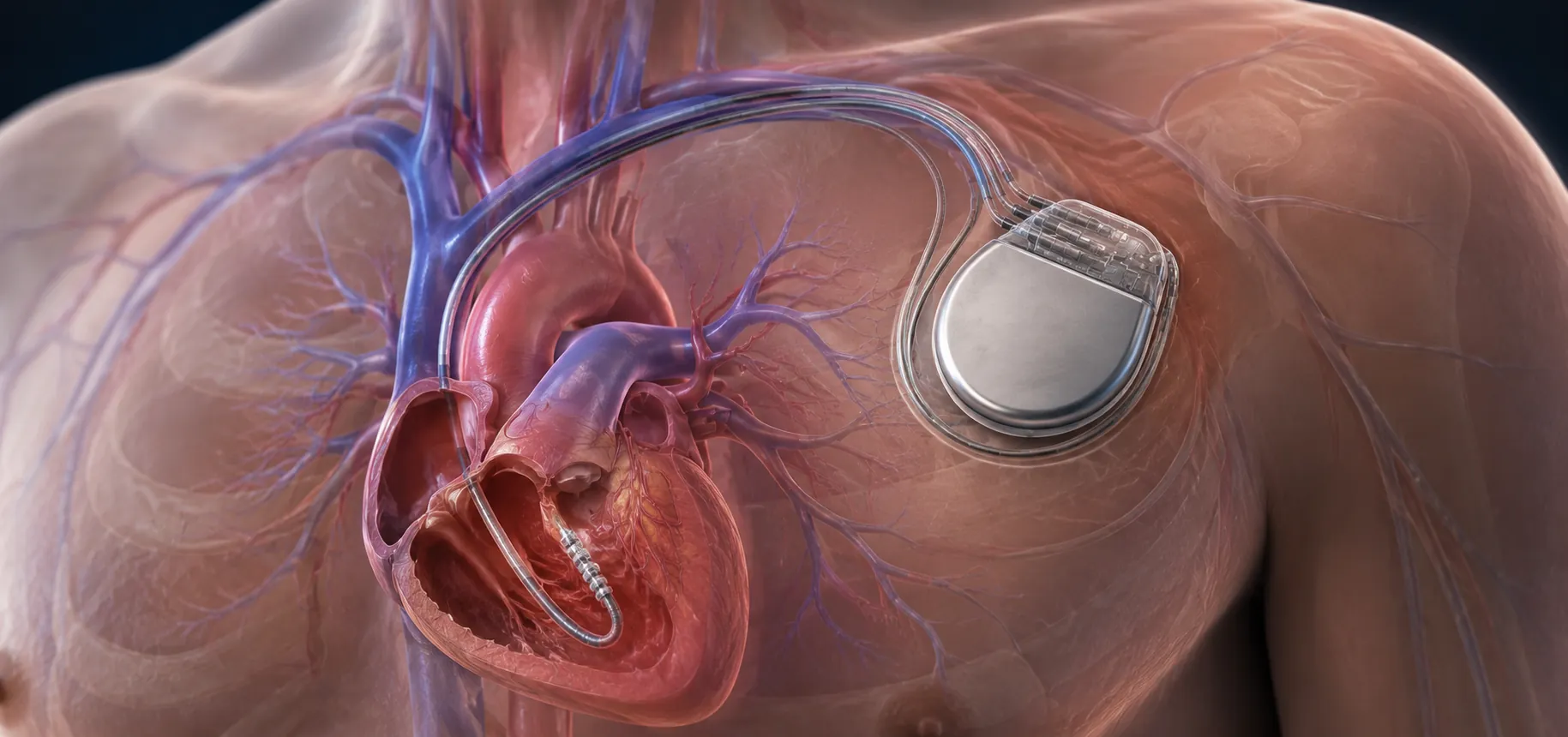
AICD
AICD, or Automatic Implantable Cardioverter Defibrillator, is a device that monitors the heart continuously and can deliver life-saving therapy if dangerous fast rhythms develop.
How AICD Helps
-
The device detects malignant ventricular rhythms and responds quickly when needed.
-
It may provide pacing, anti-tachycardia therapy, or a protective shock depending on the event.
-
AICD selection depends on rhythm history, heart function, and sudden death risk.
-
Long-term review helps assess stored events, battery status, and treatment effectiveness.
Who May Need AICD
-
Patients with prior life-threatening ventricular rhythm disturbances.
-
People with severely reduced heart function and high sudden arrest risk.
-
Cases where medicine alone is not enough to provide long-term rhythm protection.
-
Patients with inherited or structural heart disease linked to dangerous fast rhythms.
What to Expect With AICD
-
Implantation is preceded by detailed evaluation of rhythm risk and heart muscle status.
-
Patients are guided about living with the device, shock awareness, and follow-up checks.
-
Routine device interrogation helps refine settings and monitor therapy delivery.
-
Ongoing care also includes medicine review and control of the underlying heart condition.
Benefits of AICD
-
Provides continuous support for heart rhythm or pumping function.
-
Reduces the risk of serious rhythm-related complications in suitable patients.
-
Improves confidence with regular monitoring, checks, and planned follow-up.
-
Supports better long-term heart performance and quality of life.
Book a AICD Consultation
Consult our cardiology team to understand whether AICD is appropriate for your condition. Timely evaluation helps identify the right device plan, improve safety, and support better long-term heart function.
Dr Sandeep's Heart Care Center & Labs is located in Basaveshwaranagar and is easily accessible for patients travelling from Rajajinagar, Vijayanagar, Magadi Road,Malleshwaram, Mahalakshmipuram, Mahakashmi Layout, Peenya, Yeshwanthpur, Nandini Layout, Dasarahalli and surrounding areas who are looking for a cardiologist for ongoing heart disease management, BP control, or preventive cardiac care.
Frequently Asked Questions
What is an AICD?
AICD stands for Automatic Implantable Cardioverter Defibrillator, often shortened to ICD. It is a device implanted under the skin that continuously monitors your heart rhythm and can deliver pacing or a defibrillation shock if it detects a dangerous, fast rhythm originating in the heart's lower chambers.
Who may need an AICD?
An AICD may be considered for selected patients with a history of life-threatening ventricular arrhythmias, significantly reduced heart function with an increased risk of sudden cardiac arrest, or certain inherited or structural heart conditions. Not every patient with reduced heart function requires one — it is an individualized decision.
Is an AICD the same as a pacemaker?
No. While some AICDs include backup pacing for slow rhythms, their main role is to detect and treat dangerous, fast ventricular rhythms. A standard pacemaker's primary role is supporting the heart when its rhythm is too slow.
What is the difference between an AICD and a CRT-D?
An AICD focuses on detecting and treating dangerous ventricular rhythms. A CRT-D combines that same defibrillator protection with cardiac resynchronization therapy, which helps coordinate the heart's pumping action in selected patients with heart failure and electrical dyssynchrony.
How does an AICD know when to act?
The device continuously monitors your heart's electrical activity. When it detects a rhythm pattern consistent with a dangerous ventricular arrhythmia, it can respond with anti-tachycardia pacing or, if needed, a defibrillation shock, depending on how the rhythm is classified.
What happens if my AICD delivers a shock?
A shock usually means the device detected what it identified as a dangerous rhythm and delivered therapy to treat it. You should contact your treating cardiologist afterward, particularly if you feel unwell, the shock was unexpected, or you experience repeated shocks.
How often does an AICD need to be checked?
AICDs require regular follow-up visits, during which the device is interrogated to review stored rhythm events, check battery status, and confirm the device is functioning as expected. Your cardiologist will advise on the specific follow-up schedule for your device.
What are the risks of AICD implantation?
As with any implanted cardiac device, AICD implantation carries procedure-specific risks, and living with the device involves ongoing considerations such as shock awareness and periodic checks. Your cardiologist will discuss the risks and expected benefits relevant to your individual situation.
.png)