-
Follow Us On:
-
-

Peripheral Angiogram
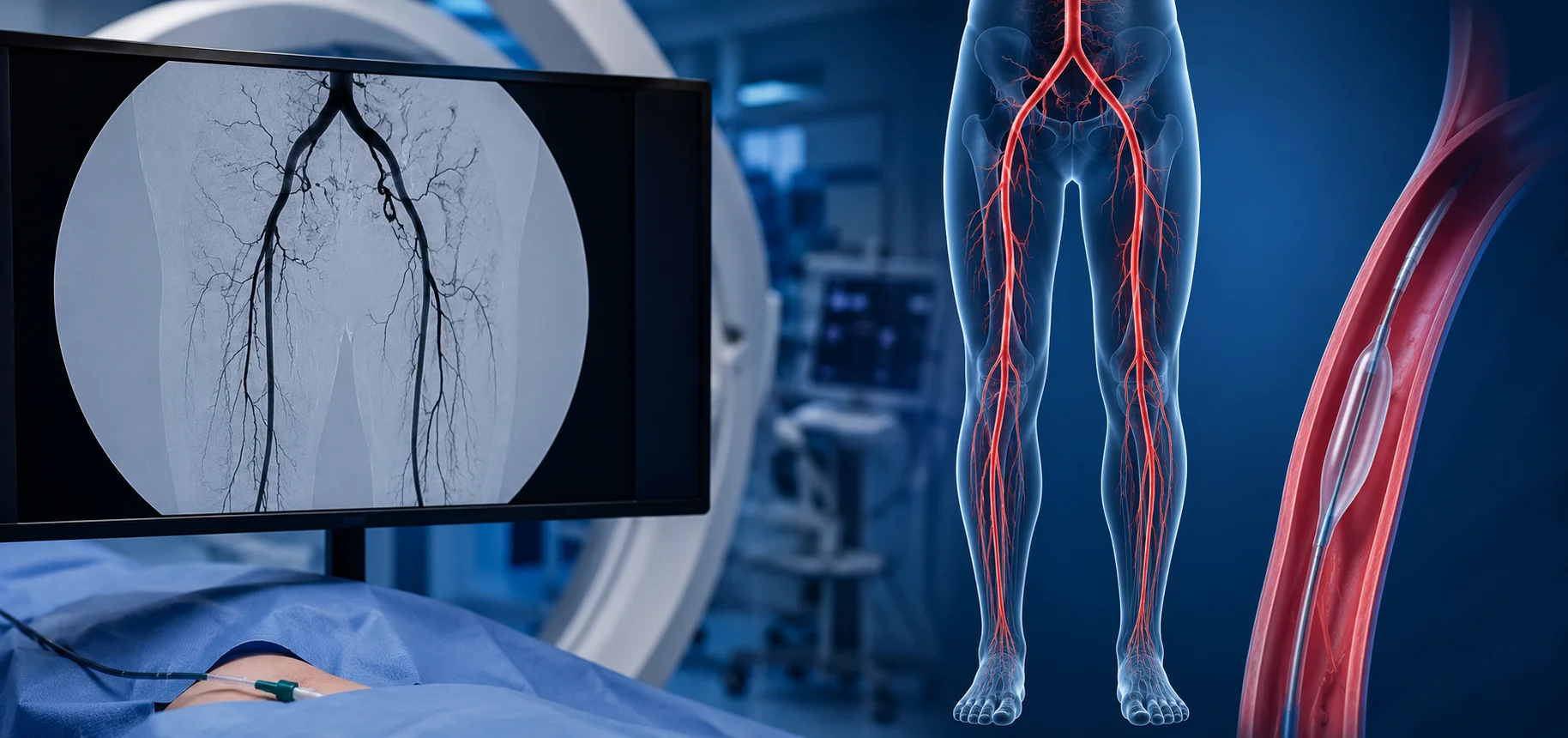
Peripheral Angiogram
Peripheral angiogram is an imaging procedure that uses contrast dye and X-ray guidance to identify blockages or narrowing in blood vessels outside the heart.
A peripheral angiogram is a diagnostic imaging procedure that uses contrast dye and X-ray guidance to identify blockages or narrowing in blood vessels outside the heart. At Dr Sandeep's Heart Care Center & Labs in Basaveshwaranagar, Bangalore, findings from a peripheral angiogram help our cardiology team plan appropriate next steps for patients, including those from Vijayanagar.
What Peripheral Angiogram Evaluates
-
The test maps blood flow in the arteries supplying the limbs, kidneys, neck, or abdominal organs.
-
It helps define the exact location, length, and severity of vascular blockages.
-
The findings guide whether medicine, angioplasty, or surgery is the better option.
-
It is especially useful when non-invasive scans suggest clinically important narrowing.
When Peripheral Angiogram Is Recommended
-
Leg pain on walking, foot wounds, or circulation changes that need precise diagnosis.
-
Resistant blood pressure when renal artery narrowing is suspected.
-
Suspected carotid or abdominal vessel disease requiring detailed vascular imaging.
-
Cases where intervention is being considered and accurate vessel mapping is essential.
Who May Benefit From Peripheral Angiogram
-
Patients with peripheral artery disease symptoms or abnormal Doppler/scan findings.
-
People with diabetes, smoking history, and progressive limb circulation issues.
-
Patients whose doctors need detailed angiographic planning before vascular treatment.
-
Individuals with unexplained vascular symptoms not fully clarified by other tests.
Benefits of Peripheral Angiogram
-
Provides clearer diagnosis and more confident treatment decisions.
-
Helps identify heart problems earlier, before symptoms become serious.
-
Reduces uncertainty when chest pain, breathlessness, or palpitations need explanation.
-
Guides follow-up care, medication changes, and preventive heart planning.
Book a Peripheral Angiogram Evaluation
Consult Dr Sandeep's Heart Care Center & Labs to know whether Peripheral Angiogram is the right next step for your symptoms or ongoing heart condition. Timely testing helps clarify diagnosis, guide treatment, and support safer follow-up care.
Dr Sandeep's Heart Care Center & Labs is located in Basaveshwaranagar and is easily accessible for patients travelling from Rajajinagar, Vijayanagar, Magadi Road,Malleshwaram, Mahalakshmipuram, Mahakashmi Layout, Peenya, Yeshwanthpur, Nandini Layout, Dasarahalli and surrounding areas who are looking for a cardiologist for ongoing heart disease management, BP control, or preventive cardiac care.
Frequently Asked Questions
What is a peripheral angiogram?
A peripheral angiogram is a diagnostic imaging test that uses contrast dye and X-ray guidance to map blood flow and identify blockages in arteries outside the heart, such as those supplying the legs, kidneys, neck, or abdomen. It does not treat the blockage itself.
Is a peripheral angiogram the same as peripheral angioplasty?
No. A peripheral angiogram is a diagnostic test that shows the location and severity of a blockage, while peripheral angioplasty is a separate treatment procedure used to open that blockage. An angiogram often guides the decision on whether angioplasty is needed.
Why is contrast dye used during a peripheral angiogram?
Contrast dye makes blood vessels visible on X-ray imaging, allowing the cardiology team to clearly see where and how severely an artery is narrowed. Patients with kidney concerns or dye allergies should discuss this with their doctor before the procedure.
Does a peripheral angiogram always mean I need treatment?
No. Some patients have a peripheral angiogram and are found to have mild or no significant blockage, in which case monitoring or medical management may be recommended instead of intervention. The next step depends entirely on the findings.
When might a doctor recommend a peripheral angiogram?
It may be recommended when symptoms like leg pain on walking, non-healing wounds, or resistant high blood pressure suggest reduced blood flow, especially if non-invasive scans point to a clinically important narrowing needing more detailed evaluation.
Is a peripheral angiogram painful or risky?
It is generally performed with local anaesthesia through a small puncture, and most patients tolerate it well, though any procedure carries some risk. Your cardiologist can explain the specific risks and what to expect based on your health status.
How long does it take to get results from a peripheral angiogram?
Findings are usually reviewed by the cardiologist during or shortly after the procedure, since the imaging is captured in real time. The doctor will then discuss the results and any recommended next steps with you directly.
Where can I get a peripheral angiogram done near Basaveshwaranagar?
Dr Sandeep's Heart Care Center & Labs in Basaveshwaranagar, Bangalore offers cardiology evaluation for peripheral vascular concerns, with peripheral angiogram planning available after consultation, and is accessible to patients from Vijayanagar and nearby areas.
.png)