-
Follow Us On:
-
-

Left Main PTCA
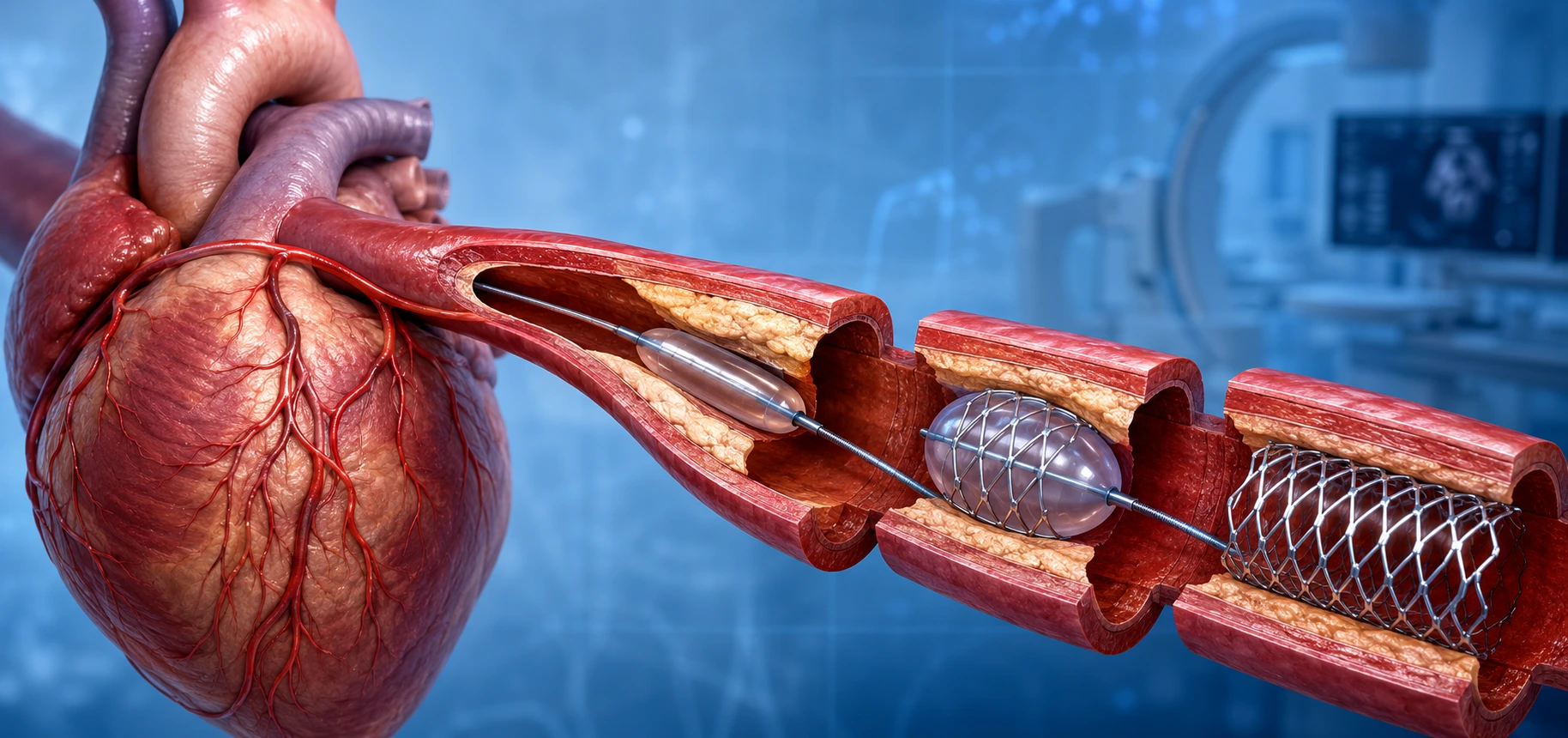
Left Main PTCA
Left Main PTCA is an advanced angioplasty performed to treat narrowing in the left main coronary artery, a vessel that supplies a large portion of the heart muscle.
What Left Main PTCA Involves
-
The procedure requires precise imaging, careful stent planning, and expert control of blood flow support.
-
Treatment is designed to restore circulation in a high-risk artery that affects a large heart territory.
-
In selected patients, it can provide a minimally invasive alternative to surgery.
-
Careful follow-up is important because the treated segment is critically important for heart function.
When Left Main PTCA May Be Recommended
-
Patients with significant left main artery narrowing causing symptoms or high-risk test findings.
-
People whose coronary anatomy is suitable for complex catheter-based treatment.
-
Cases where urgent restoration of left main blood flow is needed.
-
Patients evaluated by specialists for a less invasive option when appropriate.
Who May Benefit From Left Main PTCA
-
Patients with major heart muscle at risk because of left main disease.
-
Individuals who need advanced coronary treatment with experienced procedural planning.
-
People whose symptoms or test results show the need for timely intervention.
-
Patients requiring high-level decision making between angioplasty and surgery.
Benefits of Left Main PTCA
-
Supports timely treatment before circulation or heart function worsens.
-
Can improve symptoms, daily comfort, and overall recovery planning.
-
Helps reduce the risk of future cardiac or vascular complications.
-
Offers a structured path toward safer follow-up and better long-term outcomes.
Book a Left Main PTCA Consultation
Consult our cardiology team to understand whether Left Main PTCA is right for your condition. Timely planning helps improve treatment outcomes, reduce complications, and support smoother recovery and follow-up.
Dr Sandeep's Heart Care Center & Labs is located in Basaveshwaranagar and is easily accessible for patients travelling from Rajajinagar, Vijayanagar, Magadi Road,Malleshwaram, Mahalakshmipuram, Mahakashmi Layout, Peenya, Yeshwanthpur, Nandini Layout, Dasarahalli and surrounding areas who are looking for a cardiologist for ongoing heart disease management, BP control, or preventive cardiac care.
Frequently Asked Questions
What is Left Main PTCA?
Left Main PTCA is a form of coronary angioplasty used to treat narrowing in the left main coronary artery — the vessel that supplies blood to a large portion of the heart muscle. It involves opening the narrowed segment and, where appropriate, placing a stent to restore blood flow.
Why is left main coronary artery disease treated differently from other blockages?
The left main artery branches into two major vessels supplying most of the heart's left side, so narrowing here affects a larger area than a typical single-vessel blockage. This is why left main disease usually involves more detailed imaging and careful specialist decision-making before treatment.
Is Left Main PTCA the same as a regular angioplasty?
The core technique — accessing the artery, positioning a catheter, and treating the blockage — is similar to standard angioplasty. However, because of the artery's importance, left main procedures often involve additional imaging, such as IVUS or OCT, and more detailed pre-procedure planning.
Is bypass surgery (CABG) an alternative to Left Main PTCA?
Yes, CABG is an established alternative for left main coronary disease. The choice between PTCA and CABG depends on factors such as coronary anatomy, the extent of disease, diabetes, and overall surgical risk, and is decided individually with the treating cardiac team.
What tests are done before Left Main PTCA?
Assessment typically includes a review of symptoms, an ECG, and coronary angiography to visualise the blockage. Depending on the case, stress testing, echocardiography, or intravascular imaging such as IVUS or OCT may also be used to plan the procedure in detail.
What role does IVUS or OCT play in Left Main PTCA?
IVUS and OCT are intravascular imaging techniques that can give a detailed view inside the artery, helping assess the exact size and nature of the blockage. This can support decisions on stent sizing and placement, particularly for a critical vessel like the left main artery.
What are the risks of Left Main PTCA?
Like any coronary intervention, Left Main PTCA carries procedure-specific risks that vary from person to person based on overall health, coronary anatomy, and disease severity. Your cardiologist will discuss your individual risk profile and what to expect before deciding on treatment.
How long is recovery after Left Main PTCA?
Recovery time varies by individual and by how the procedure was performed. Because the left main artery is clinically significant, follow-up monitoring is an important part of aftercare, and your cardiologist will advise on activity, medication, and review appointments specific to your case.
.png)