-
Follow Us On:
-
-

TMT
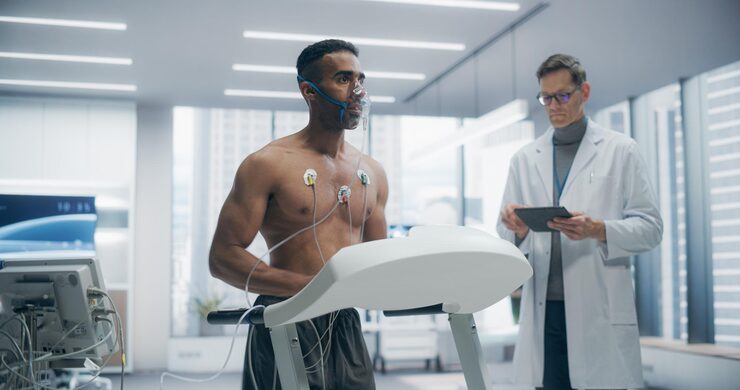
TMT (Treadmill Test) / Exercise Stress Test in Basaveshwaranagar Bangalore
TMT, or Treadmill Test, evaluates how the heart responds to physical stress and helps identify exercise-related symptoms or evidence of reduced blood flow to the heart muscle.
A TMT, or treadmill test, is an exercise stress test in which your ECG, heart rate and blood pressure are monitored while you walk on a treadmill. A cardiologist may recommend it to assess exertional symptoms or functional capacity. It is not suitable for everyone, and results are interpreted along with your clinical picture.
What TMT Evaluates
-
Records ECG and blood pressure while the patient walks on a treadmill.
-
Helps detect effort-related chest pain, breathlessness, and rhythm changes.
-
Can show exercise-induced ischemia when routine resting tests are normal.
-
Is useful in selected patients to estimate functional capacity and treatment response.
When TMT Is Recommended
-
Chest pain or breathlessness that appears mainly during walking or physical exertion.
-
Intermediate coronary risk where exercise testing helps decision making.
-
Follow-up after treatment when exercise-related symptoms need reassessment.
-
Patients who need supervised evaluation of effort tolerance and ECG response.
Who May Benefit From TMT
-
Patients with suspected stable coronary artery disease.
-
People with exertional symptoms but no clear diagnosis on resting ECG.
-
Individuals fit enough to exercise safely under monitored conditions.
-
Patients whose cardiologist needs functional information before advancing treatment.
Benefits of TMT
-
Provides clearer diagnosis and more confident treatment decisions.
-
Helps identify heart problems earlier, before symptoms become serious.
-
Reduces uncertainty when chest pain, breathlessness, or palpitations need explanation.
-
Guides follow-up care, medication changes, and preventive heart planning.
Book a TMT Evaluation
Consult Dr Sandeep's Heart Care Center & Labs to know whether TMT is the right next step for your symptoms or ongoing heart condition. Timely stress testing helps clarify diagnosis, guide treatment, and support safer follow-up care.
Dr Sandeep's Heart Care Center & Labs is located in Basaveshwaranagar and is easily accessible for patients travelling from Rajajinagar, Vijayanagar, Magadi Road,Malleshwaram, Mahalakshmipuram, Mahakashmi Layout, Peenya, Yeshwanthpur, Nandini Layout, Dasarahalli and surrounding areas who are looking for a cardiologist for ongoing heart disease management, BP control, or preventive cardiac care.
Frequently Asked Questions
How long does a TMT take?
The exercise part often lasts less than 15 minutes, but preparation, resting recordings and recovery monitoring make the whole visit longer. The speed and slope of the treadmill increase in stages. Ask the centre for expected timing when booking.
What should I wear and eat before a TMT?
Wear comfortable clothes and walking shoes. A heavy meal just before the test is usually avoided, and you may be advised to skip caffeine. Follow the instructions given at booking and carry your medicine list. Do not stop medicines yourself before the test.
Should I take my regular medicines on the day of the TMT?
Some heart medicines can affect the test response, and in certain cases doctors ask for specific adjustments. Do not stop or change any medicine on your own. Ask the centre or your cardiologist for clear instructions before the test day.
Who should not do a TMT?
A TMT may not be suitable if you have unstable chest pain, a very recent heart attack, uncontrolled rhythm problems, severe valve narrowing, uncontrolled blood pressure or difficulty walking. The cardiologist decides after assessing you and may suggest another test.
What does a positive TMT mean?
A positive TMT suggests that the ECG changed or symptoms occurred with exercise, which may indicate reduced blood flow to the heart. It is not a final diagnosis. Your cardiologist may advise further tests, such as cardiac CT or coronary angiography, depending on the overall picture.
Can a TMT be normal even if I have blockages?
Yes, it can happen. A TMT may be normal if a blockage is not severe enough to limit blood flow during exercise, and it can sometimes be abnormal without significant blockage. That is why results are interpreted with symptoms, risk factors and other tests.
What if I cannot walk on a treadmill?
If you have knee, back, balance or breathing problems, a standard TMT may not be practical. Your cardiologist may suggest another form of stress testing or a different test. Please tell the centre about any mobility limits when booking.
Can I resume normal activity after a TMT?
Most people feel well afterwards, but you should rest until your heart rate and breathing settle. If you feel dizzy, develop chest pain or palpitations after the test, inform the staff immediately. Ask your cardiologist when to restart exercise routines.
.png)