-
Follow Us On:
-
-

Laboratory Services
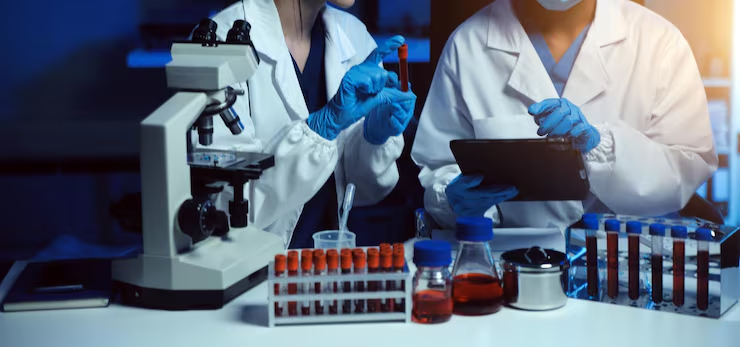
Laboratory Services & Blood Tests in Basaveshwaranagar, Bangalore
Laboratory Services provide blood and sample testing that supports cardiac care, diabetes monitoring, infection screening, preventive checkups, and treatment follow-up.
Blood tests help doctors assess health, monitor long-term conditions and plan treatment. At Dr Sandeep's Heart Care Center & Labs in Basaveshwaranagar, Bangalore, laboratory services include CBC, HbA1c, lipid profile, kidney, liver and thyroid tests, plus urine and infection screening. Which tests you need depends on your doctor's advice.
What Laboratory Services Support
-
Blood tests for sugar, cholesterol, kidney function, thyroid, anemia, and cardiac risk markers.
-
Screening that helps identify infection, inflammation, electrolyte imbalance, or organ dysfunction.
-
Baseline investigations before procedures, treatment changes, or routine review.
-
Regular monitoring to track response to long-term therapy.
When Laboratory Services Are Recommended
-
Routine health checkups or doctor-advised follow-up testing.
-
Symptoms needing biochemical confirmation alongside clinical evaluation.
-
Diabetes, BP, cholesterol, kidney, or thyroid monitoring.
-
Pre-procedure, post-treatment, or recovery-related assessment.
Who May Benefit From Laboratory Services
-
Cardiac patients needing risk-factor and medicine monitoring.
-
People with chronic conditions requiring periodic blood tests.
-
Individuals with unexplained weakness, fever, weight change, or abnormal symptoms.
-
Patients who want convenient diagnostic support in one place.
Benefits of Laboratory Services
-
Speeds up diagnosis and treatment decisions.
-
Helps track disease control and medication safety.
-
Supports preventive care through early detection.
-
Makes follow-up more organized and data-driven.
Book a Laboratory Services Consultation
Consult Dr Sandeep's Heart Care Center & Labs for essential blood and diagnostic testing that supports timely treatment decisions and better follow-up. Accurate test results help organize preventive and ongoing care.
Dr Sandeep's Heart Care Center & Labs is located in Basaveshwaranagar and is easily accessible for patients travelling from Rajajinagar, Vijayanagar, Magadi Road,Malleshwaram, Mahalakshmipuram, Mahakashmi Layout, Peenya, Yeshwanthpur, Nandini Layout, Dasarahalli and surrounding areas who are looking for a cardiologist for ongoing heart disease management, BP control, or preventive cardiac care.
Frequently Asked Questions
What are laboratory services?
Laboratory services involve testing blood and other samples to help doctors assess health. At this centre, the listed tests cover blood counts, blood sugar, cholesterol, kidney and liver function, thyroid hormones, and urine and infection screening. Doctors use results alongside symptoms and examination to support diagnosis, monitoring and treatment decisions.
What does a CBC test assess?
A complete blood count (CBC) measures red cells, white cells, platelets and haemoglobin. It may help assess anaemia, signs of infection or inflammation, and platelet levels. Results are interpreted with your symptoms and examination, since an abnormal value alone does not identify a specific cause.
What does HbA1c measure?
HbA1c reflects your average blood sugar over roughly the previous two to three months. Doctors use it, often alongside fasting and post-meal sugar tests, to assess and monitor diabetes control. Your doctor interprets the result in the context of your health and treatment.
What is a lipid profile and why is it done in heart care?
A lipid profile measures total cholesterol, HDL, LDL and triglycerides. Doctors use it as one part of cardiovascular risk assessment, together with blood pressure, diabetes, age, family history and lifestyle. It does not predict heart disease by itself, and the targets that apply differ from person to person.
Why are kidney and liver function tests done?
Kidney function tests (urea, creatinine, uric acid) show how well the kidneys are working, which can matter before some procedures and when medicines are started or adjusted. Liver function tests (bilirubin, SGOT/SGPT) assess liver health and may be monitored with certain medicines. Your doctor decides which are needed.
Why might a thyroid test be recommended?
Thyroid tests (TSH, T3, T4) measure thyroid hormone levels. An overactive or underactive thyroid can affect heart rate, energy, weight and cholesterol, so doctors may advise testing when symptoms or other results suggest it. Whether you need it depends on your clinical assessment.
What do urine routine and infection screening tests show?
Urine routine testing examines urine for features such as protein, sugar and blood cells, which can point toward urinary or kidney issues. HIV, HBsAg and HCV tests screen for specific infections and are usually done when a doctor advises, for example in some routine or pre-procedure settings. Results should be discussed with a clinician.
Do I need every test listed, and can a blood test alone diagnose a heart condition?
No. Tests are chosen according to your symptoms, age, medical history and medicines, so most people need only some of those listed. A blood test alone usually cannot diagnose a heart condition; results are combined with examination and tests such as ECG or echo. Your doctor decides what is appropriate.
Diagnostic Testing
Essential Lab Tests We Recommend
01
Complete Blood Count & Hematology
- CBC
- ESR
- Blood Grouping & Typing
02
Diabetes & Sugar Profile
- FBS / PPBS
- RBS
- HbA1C
03
Lipid & Cardiac Risk Profile
- Total Cholesterol
- HDL / LDL
- Triglycerides
04
Kidney & Liver Function
- RFT (Urea, Creatinine, Uric Acid)
- LFT (Bilirubin, SGOT/SGPT)
05
Thyroid & Hormone Profile
- TSH
- T3 / T4
06
Infection & Urine Screening
- HIV / HBsAg / HCV
- Urine Routine
.png)