-
Follow Us On:
-
-

Coronary Angioplasty
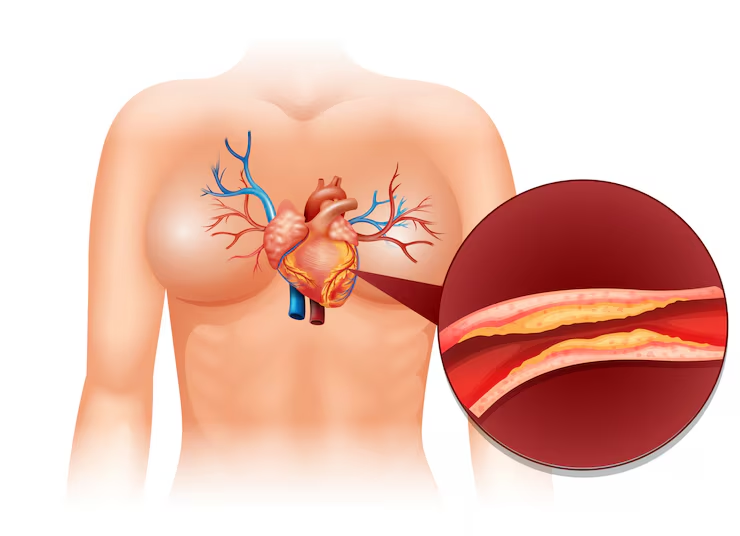
Coronary Angioplasty: Balloon Angioplasty & Stent Placement
Coronary angioplasty opens narrowed or blocked heart arteries using a balloon and usually a stent so that blood flow to the heart muscle can be restored.
Coronary angioplasty is a catheter-based procedure that uses a balloon, and usually a stent, to reopen a narrowed or blocked coronary artery and restore blood flow to the heart muscle. At Dr Sandeep's Heart Care Center & Labs in Basaveshwaranagar, Bangalore, angioplasty is considered after coronary angiography confirms a blockage suitable for treatment.
What Coronary Angioplasty Involves
-
The blocked coronary segment is identified with angiography before the artery is treated.
-
Balloon expansion and stent placement help reopen the artery and improve blood supply.
-
The procedure is used in stable blockage, unstable angina, and heart attack settings when appropriate.
-
After treatment, medicines and follow-up remain essential to protect the stent and surrounding arteries.
When Coronary Angioplasty May Be Recommended
-
Patients with significant coronary blockage causing chest pain, breathlessness, or reduced exercise tolerance.
-
People with heart attack or unstable symptoms needing urgent restoration of blood flow.
-
Cases where testing or angiography confirms a blockage suitable for stenting.
-
Patients whose symptoms continue despite optimal medical therapy.
Who May Benefit From Coronary Angioplasty
-
People with angina that limits normal activity or quality of life.
-
Patients who need timely coronary treatment to reduce future heart muscle damage.
-
Individuals suitable for minimally invasive treatment rather than surgery.
-
Patients whose diagnostic tests clearly correlate symptoms with a treatable coronary lesion.
Benefits of Coronary Angioplasty
-
Supports timely treatment before circulation or heart function worsens.
-
Can improve symptoms, daily comfort, and overall recovery planning.
-
Helps reduce the risk of future cardiac or vascular complications.
-
Offers a structured path toward safer follow-up and better long-term outcomes.
Book a Coronary Angioplasty Consultation
Consult our cardiology team to understand whether Coronary Angioplasty is right for your condition. Timely planning helps improve treatment outcomes, reduce complications, and support smoother recovery and follow-up.
Dr Sandeep's Heart Care Center & Labs is located in Basaveshwaranagar and is easily accessible for patients travelling from Rajajinagar, Vijayanagar, Magadi Road,Malleshwaram, Mahalakshmipuram, Mahakashmi Layout, Peenya, Yeshwanthpur, Nandini Layout, Dasarahalli and surrounding areas who are looking for a cardiologist for ongoing heart disease management, BP control, or preventive cardiac care.
Frequently Asked Questions
What is coronary angioplasty?
Coronary angioplasty is a catheter-based procedure that uses a balloon, and usually a stent, to open a narrowed or blocked coronary artery. It aims to restore blood flow to the heart muscle. Your cardiologist will confirm suitability through angiography before recommending the procedure.
What is the difference between a coronary angiogram and angioplasty?
A coronary angiogram is a diagnostic imaging test that shows whether an artery is blocked. Coronary angioplasty is the treatment that follows, using a balloon and stent to open that blockage. The two are related but serve different purposes in your cardiac care.
Is coronary angioplasty a major operation?
Angioplasty is generally less invasive than open-heart surgery and is performed through a catheter, often under local anaesthesia. It typically involves a shorter hospital stay than bypass surgery, though the exact course depends on the individual patient's condition.
What is a coronary stent?
A coronary stent is a small mesh tube placed inside the artery during angioplasty to help hold it open after the blockage is treated. The specific type of stent used depends on the artery, blockage characteristics, and your cardiologist's clinical judgement.
Is angioplasty better than bypass surgery?
Neither option is universally "better" — the right choice depends on the number, location and complexity of blockages, along with your overall health. Your cardiologist will recommend angioplasty, complex angioplasty or bypass surgery based on individual evaluation.
What happens after a coronary stent is placed?
After stenting, medicines (often blood-thinning medication) and regular follow-up are usually needed to protect the stent and reduce the risk of re-narrowing. Your cardiologist will provide a personalised medication and follow-up plan.
Is coronary angioplasty painful?
Most patients experience minimal discomfort since the procedure is done under local anaesthesia at the catheter insertion site. Some pressure or mild discomfort can occur; your care team can discuss pain management specific to your procedure.
How soon can I resume normal activities after angioplasty?
Recovery time varies from patient to patient depending on the complexity of the procedure and overall health. Your cardiologist will give specific guidance on activity, driving and work resumption during your follow-up visit.
.png)