-
Follow Us On:
-
-

Implantable Cardioverter Defibrillators - ICD
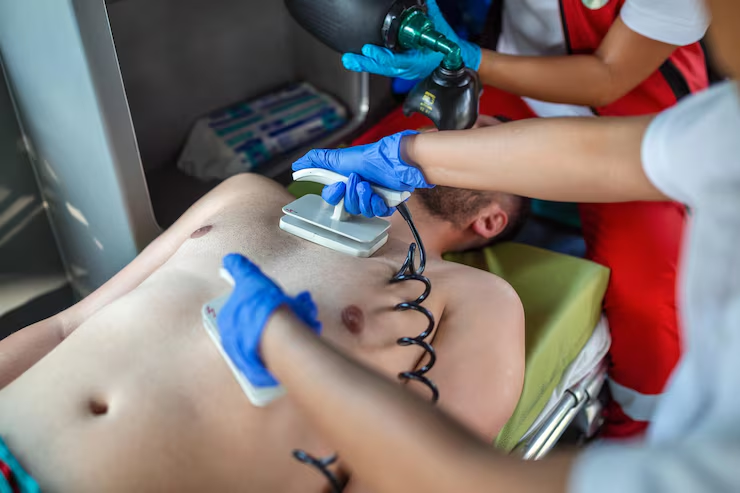
Implantable Cardioverter Defibrillators - ICD
Implantable Cardioverter Defibrillators, or ICDs, are placed in patients at risk of life-threatening fast heart rhythms so the device can detect and treat them immediately.
An implantable cardioverter defibrillator (ICD) is a small device placed under the skin to continuously monitor the heart's rhythm and deliver pacing or a shock if a dangerous fast rhythm develops. At Dr Sandeep's Heart Care Center & Labs in Basaveshwaranagar, Bangalore, ICD implantation is considered only after detailed cardiac evaluation, when clinically indicated for the patient's condition.
What Implantable Cardioverter Defibrillators - ICD Involves
-
The device continuously monitors the heart rhythm and responds when dangerous ventricular rhythms occur.
-
Implantation is planned after careful assessment of heart function, prior rhythm events, and future risk.
-
ICDs can provide pacing, anti-tachycardia therapy, and shock treatment when required.
-
Regular device review is essential to confirm settings, battery life, and event recordings.
When Implantable Cardioverter Defibrillators - ICD May Be Recommended
-
Patients with documented ventricular tachycardia or survivors of sudden cardiac arrest.
-
People with severely reduced heart function who remain at high arrhythmic risk.
-
Patients with inherited or structural heart disorders linked to dangerous fast rhythms.
-
Cases where long-term rhythm protection is needed beyond medicine alone.
Who May Benefit From Implantable Cardioverter Defibrillators - ICD
-
Patients with repeated serious rhythm events or strong risk markers on cardiac evaluation.
-
Individuals whose heart muscle weakness places them at elevated sudden death risk.
-
People needing continuous rhythm surveillance and emergency device therapy.
-
Patients who require specialist guidance for long-term device-based prevention.
Benefits of Implantable Cardioverter Defibrillators - ICD
-
Supports timely treatment before circulation or heart function worsens.
-
Can improve symptoms, daily comfort, and overall recovery planning.
-
Helps reduce the risk of future cardiac or vascular complications.
-
Offers a structured path toward safer follow-up and better long-term outcomes.
Book a Implantable Cardioverter Defibrillators - ICD Consultation
Consult our cardiology team to understand whether Implantable Cardioverter Defibrillators - ICD is right for your condition. Timely planning helps improve treatment outcomes, reduce complications, and support smoother recovery and follow-up.
Dr Sandeep's Heart Care Center & Labs is located in Basaveshwaranagar and is easily accessible for patients travelling from Rajajinagar, Vijayanagar, Magadi Road,Malleshwaram, Mahalakshmipuram, Mahakashmi Layout, Peenya, Yeshwanthpur, Nandini Layout, Dasarahalli and surrounding areas who are looking for a cardiologist for ongoing heart disease management, BP control, or preventive cardiac care.
Frequently Asked Questions
What is an ICD and how is it different from a pacemaker?
An ICD (implantable cardioverter defibrillator) monitors heart rhythm and can deliver pacing or a shock to correct dangerously fast rhythms. A standard pacemaker mainly treats slow heart rates. Some devices combine both functions. Your cardiologist can advise which is appropriate after evaluating your heart rhythm and condition.
Who may need an ICD?
ICDs may be considered for patients with documented ventricular tachycardia, survivors of sudden cardiac arrest, or those with severely reduced heart function at high arrhythmic risk. Not everyone with an irregular heartbeat needs an ICD. Suitability is decided after detailed cardiac evaluation by a cardiologist.
Is ICD implantation a major surgery?
ICD implantation is typically a catheter-based procedure done under local anaesthesia with sedation, not open-heart surgery. The device is placed under the skin, usually near the collarbone, with leads guided into the heart through a vein. Your cardiologist can explain what to expect for your specific case.
Does an ICD hurt when it delivers a shock?
Patients may feel a brief, noticeable jolt if the device delivers a shock, though many ICD therapies are actually painless pacing pulses that go unnoticed. The exact experience varies by patient and situation; discuss any concerns about device therapy with your cardiologist.
How often does an ICD need to be checked?
Regular device follow-up is essential to confirm battery life, lead function and recorded rhythm events. The frequency of checks is decided by your cardiologist based on your device type and clinical history, so ask your care team for a personalised follow-up schedule.
Can I live a normal life with an ICD?
Many patients continue regular daily activities after ICD implantation, though your cardiologist may advise on precautions such as avoiding strong magnetic fields or discussing activity and driving guidance specific to your condition. Individual advice depends on your heart condition and device type.
What is the difference between ICD and CRT-D devices?
An ICD primarily manages dangerous rhythm events, while a CRT-D (cardiac resynchronisation therapy defibrillator) also helps coordinate the heart's pumping function in certain heart failure patients. Whether a combination device is appropriate depends on individual heart function and rhythm findings.
How do I know if I should consult a cardiologist about ICD therapy?
If you have had a serious rhythm event, a family history of sudden cardiac death, or a diagnosed heart condition affecting heart muscle function, it is reasonable to discuss ICD therapy with a cardiologist. A clinical evaluation is needed before any device decision is made.
.png)