-
Follow Us On:
-
-

Cardiac MRI
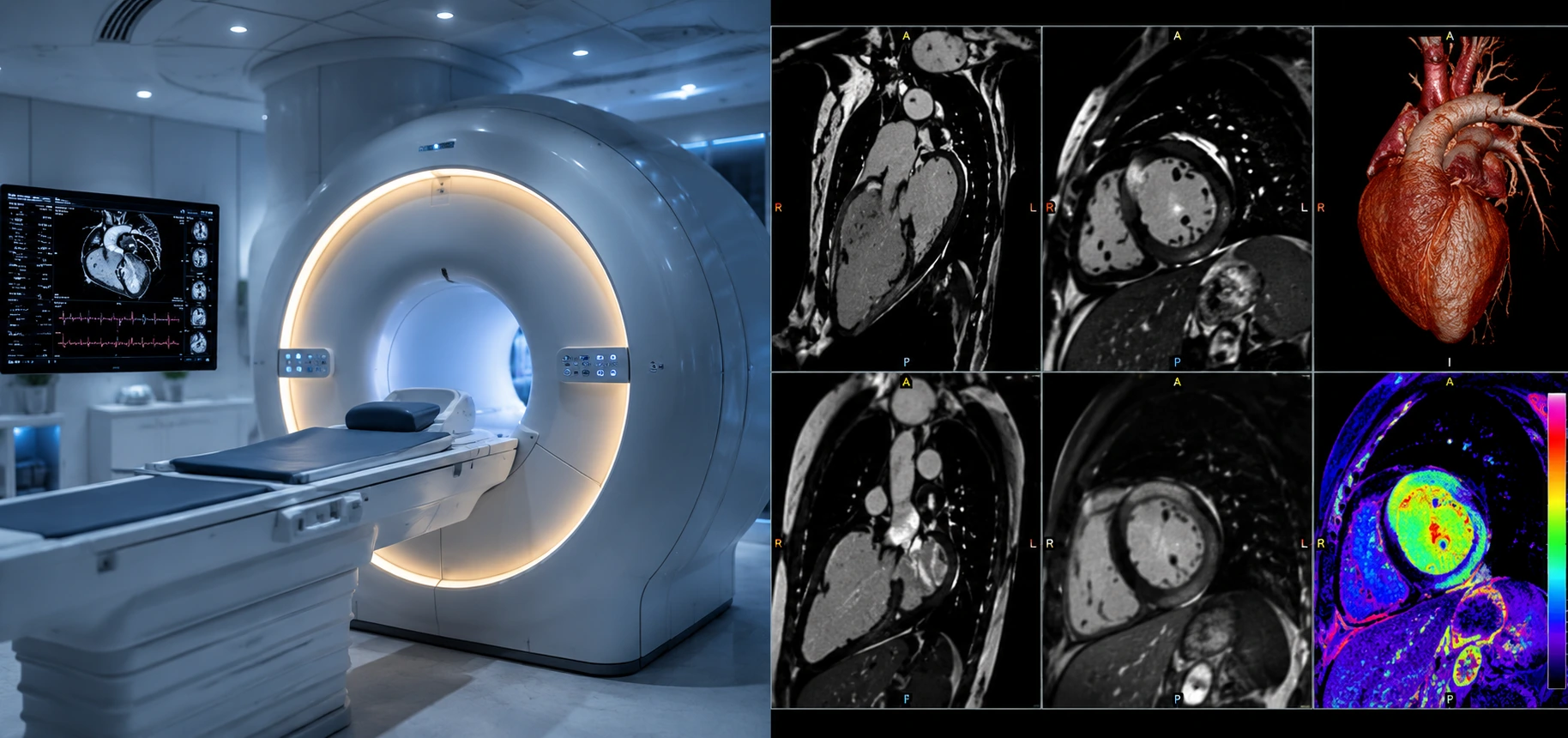
Cardiac MRI
Cardiac MRI provides highly detailed images of the heart muscle, chambers, valves, and surrounding structures, helping diagnose complex heart conditions with excellent tissue characterisation.
Cardiac MRI provides highly detailed images of the heart muscle, chambers, valves, and surrounding structures, helping evaluate complex heart conditions with detailed tissue characterisation. At Dr Sandeep's Heart Care Center & Labs in Basaveshwaranagar, Bangalore, cardiac MRI is used selectively alongside other cardiac tests, with care accessible to patients from Vijayanagar.
What Cardiac MRI Evaluates
-
It can assess heart muscle damage, inflammation, scarring, and structural abnormalities in detail.
-
MRI helps clarify cardiomyopathy, myocarditis, congenital defects, and difficult diagnostic cases.
-
The test offers accurate measurement of chamber size, function, and tissue quality.
-
It is especially valuable when Echo or routine tests do not answer the full clinical question.
When Cardiac MRI Is Recommended
-
Unclear heart muscle disease, cardiomyopathy, or suspected myocarditis.
-
Need for detailed tissue analysis after abnormal Echo or other cardiac imaging.
-
Complex congenital or structural heart conditions needing advanced imaging.
-
Follow-up where precise function and scar assessment may change treatment strategy.
Who May Benefit From Cardiac MRI
-
Patients with unexplained reduction in heart function or complex structural findings.
-
People whose earlier tests need confirmation through higher-detail imaging.
-
Individuals being evaluated for heart muscle inflammation, scar, or infiltrative disease.
-
Patients requiring comprehensive non-invasive cardiac tissue assessment.
Benefits of Cardiac MRI
-
Provides clearer diagnosis and more confident treatment decisions.
-
Helps identify heart problems earlier, before symptoms become serious.
-
Reduces uncertainty when chest pain, breathlessness, or palpitations need explanation.
-
Guides follow-up care, medication changes, and preventive heart planning.
Book a Cardiac MRI Evaluation
Consult Dr Sandeep's Heart Care Center & Labs to know whether Cardiac MRI is the right next step for your symptoms or ongoing heart condition. Timely testing helps clarify diagnosis, guide treatment, and support safer follow-up care.
Dr Sandeep's Heart Care Center & Labs is located in Basaveshwaranagar and is easily accessible for patients travelling from Rajajinagar, Vijayanagar, Magadi Road,Malleshwaram, Mahalakshmipuram, Mahakashmi Layout, Peenya, Yeshwanthpur, Nandini Layout, Dasarahalli and surrounding areas who are looking for a cardiologist for ongoing heart disease management, BP control, or preventive cardiac care.
Frequently Asked Questions
What is cardiac MRI used for?
Cardiac MRI is a detailed imaging test that shows the heart muscle, chambers, valves, and surrounding structures, helping evaluate complex heart conditions such as cardiomyopathy, myocarditis, or congenital defects. It is especially useful when other tests do not fully answer the clinical question.
How is cardiac MRI different from an echocardiogram?
An echocardiogram is usually the first test used to assess heart structure and function using ultrasound, while cardiac MRI provides more detailed tissue information and is generally used when Echo or other routine tests are inconclusive. Your cardiologist decides which is appropriate.
How is cardiac MRI different from a cardiac CT scan?
Cardiac MRI is generally used to assess heart muscle tissue, scarring, and inflammation in detail, while cardiac CT is generally used to evaluate coronary artery anatomy and calcium build-up. The choice between them depends on the specific clinical question being investigated.
Does everyone with a heart condition need a cardiac MRI?
No. Cardiac MRI is typically a selective, second-line test used for specific situations, such as when Echo findings are unclear or a detailed tissue assessment is needed. Most routine cardiac evaluations do not require an MRI.
What heart conditions can cardiac MRI help evaluate?
Cardiac MRI can help evaluate conditions such as cardiomyopathy, myocarditis, congenital heart defects, and cases where heart muscle scarring or inflammation needs detailed assessment. The specific role of MRI in your case depends on your symptoms and prior test findings.
When might a cardiologist recommend a cardiac MRI after an Echo?
If an echocardiogram raises questions that need more detailed tissue information, such as unclear heart muscle disease or suspected inflammation, a cardiologist may recommend cardiac MRI for further clarification. This decision depends on your specific clinical picture.
Is cardiac MRI invasive?
Cardiac MRI is a non-invasive imaging test. Beyond this, the website does not specify additional procedural details such as scan duration or contrast use, so please discuss the specifics of your scan directly with your cardiologist or the imaging team.
Where can I get a cardiac MRI evaluation near Basaveshwaranagar?
Dr Sandeep's Heart Care Center & Labs in Basaveshwaranagar, Bangalore offers cardiac MRI as part of cardiac evaluation planning, and is accessible to patients from Vijayanagar and nearby areas of Bangalore.
.png)