-
Follow Us On:
-
-

Calcium Modification - Rotablation
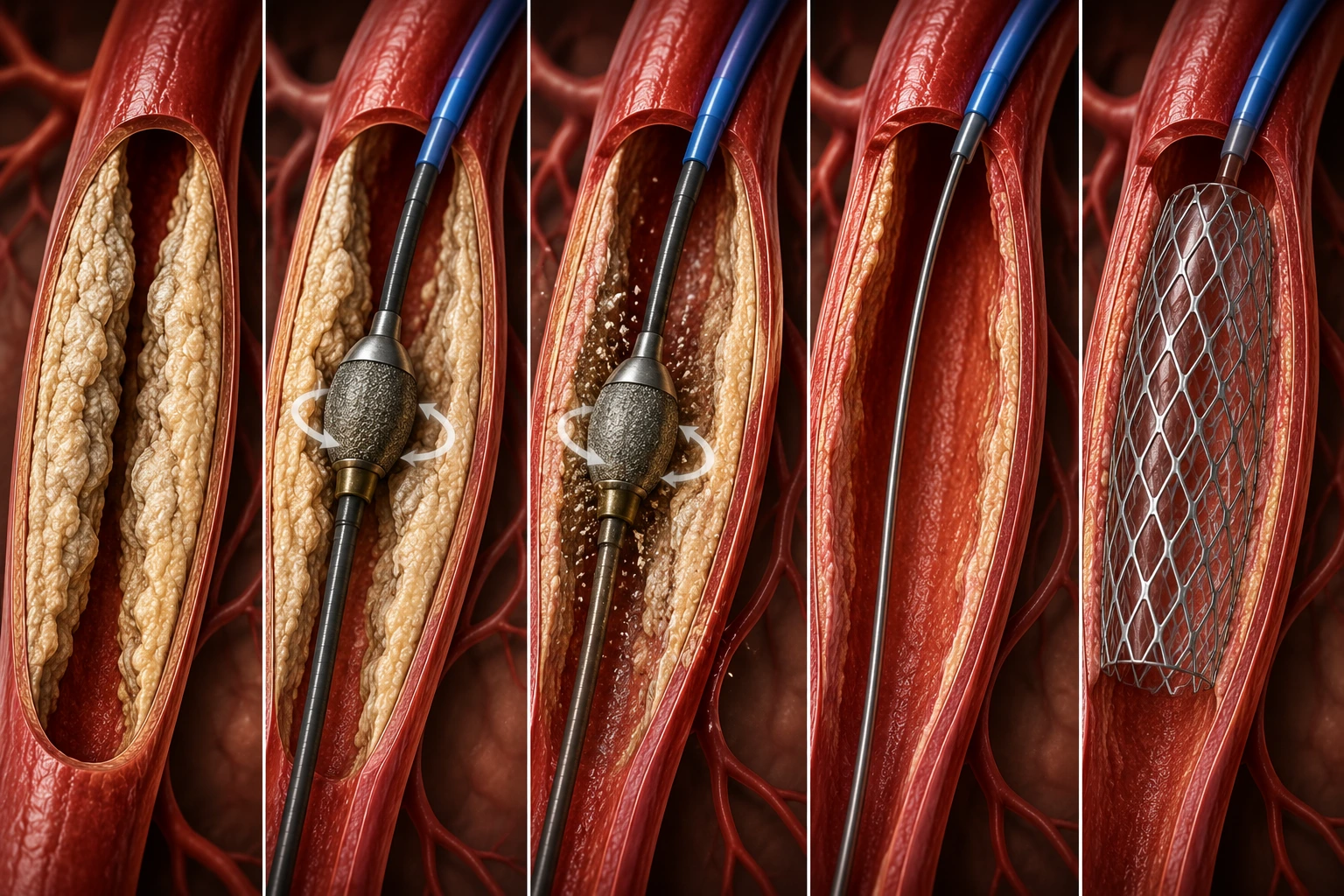
Calcium Modification - Rotablation
Rotablation is a calcium modification technique used to treat heavily calcified coronary blockages so that balloons and stents can be delivered and expanded properly.
What Calcium Modification - Rotablation Involves
-
A high-speed rotational device is used to modify rigid calcium within the artery wall.
-
This creates a safer path for balloon dilation and effective stent placement.
-
It is especially useful when standard angioplasty tools cannot cross or expand the lesion.
-
Treatment planning focuses on difficult calcified arteries that need specialised preparation.
When Calcium Modification - Rotablation May Be Recommended
-
Patients with heavily calcified coronary lesions identified during angiography or imaging.
-
Cases where ordinary balloons or stents may not open the artery adequately.
-
People requiring complex coronary treatment with plaque preparation before stenting.
-
Patients whose symptoms and anatomy justify advanced calcium-modification strategy.
Who May Benefit From Calcium Modification - Rotablation
-
Patients with severe calcific coronary disease where routine angioplasty may fail.
-
Individuals who need lesion preparation to improve stent deployment and long-term result.
-
People whose coronary blockages are rigid, resistant, or technically difficult.
-
Patients selected by specialists for complex plaque modification.
Benefits of Calcium Modification - Rotablation
-
Supports timely treatment before circulation or heart function worsens.
-
Can improve symptoms, daily comfort, and overall recovery planning.
-
Helps reduce the risk of future cardiac or vascular complications.
-
Offers a structured path toward safer follow-up and better long-term outcomes.
Book a Calcium Modification - Rotablation Consultation
Consult our cardiology team to understand whether Calcium Modification - Rotablation is right for your condition. Timely planning helps improve treatment outcomes, reduce complications, and support smoother recovery and follow-up.
Frequently Asked Questions
What is Rotablation?
Rotablation, or rotational atherectomy, is a technique used to treat heavily calcified coronary blockages. A small, high-speed rotating device modifies the hardened calcium within the artery so that balloons and stents can be delivered and expanded properly during the rest of the angioplasty procedure.
What is coronary artery calcification?
Coronary artery calcification is the build-up of calcium within the artery wall, alongside fatty plaque, over time. This can make a blockage hard and rigid rather than soft, which can make it harder to treat with standard balloon angioplasty and stenting alone.
Why can calcified blockages be harder to treat than other blockages?
Rigid calcium can prevent a balloon from expanding fully and can stop a stent from opening properly against the artery wall. If not addressed, this can affect how well the stent sits and functions, which is why calcium modification is sometimes needed first.
Is Rotablation the same as angioplasty?
No. Rotablation is a preparation technique used before balloon angioplasty and stent placement, specifically for lesions with heavy calcium build-up. It modifies the calcium so that the subsequent angioplasty and stenting steps can be carried out more effectively.
When is Rotablation considered instead of standard angioplasty?
Rotablation is considered in selected cases where imaging or angiography shows heavy coronary calcification that standard balloons may not adequately prepare. Not every calcified lesion needs Rotablation — the decision is based on individual angiographic findings and clinical judgement.
What imaging helps assess coronary calcification?
Coronary angiography gives an initial view of the blockage, while intravascular imaging techniques such as IVUS or OCT can provide a more detailed look at the extent and pattern of calcium within the artery wall, helping guide the treatment plan.
Is Rotablation the only technique used for calcium modification?
No. Other calcium-modification techniques, such as orbital atherectomy, are also used depending on the lesion and clinical situation. The choice between techniques is based on the specific characteristics of the calcified blockage, not a fixed rule.
What are the risks of Rotablation?
Like other complex coronary procedures, Rotablation carries procedure-specific risks that vary depending on the extent of calcification and overall coronary anatomy. Your cardiologist will explain the risks relevant to your individual case before proceeding with treatment.
.png)