-
Follow Us On:
-
-

CTO PTCA
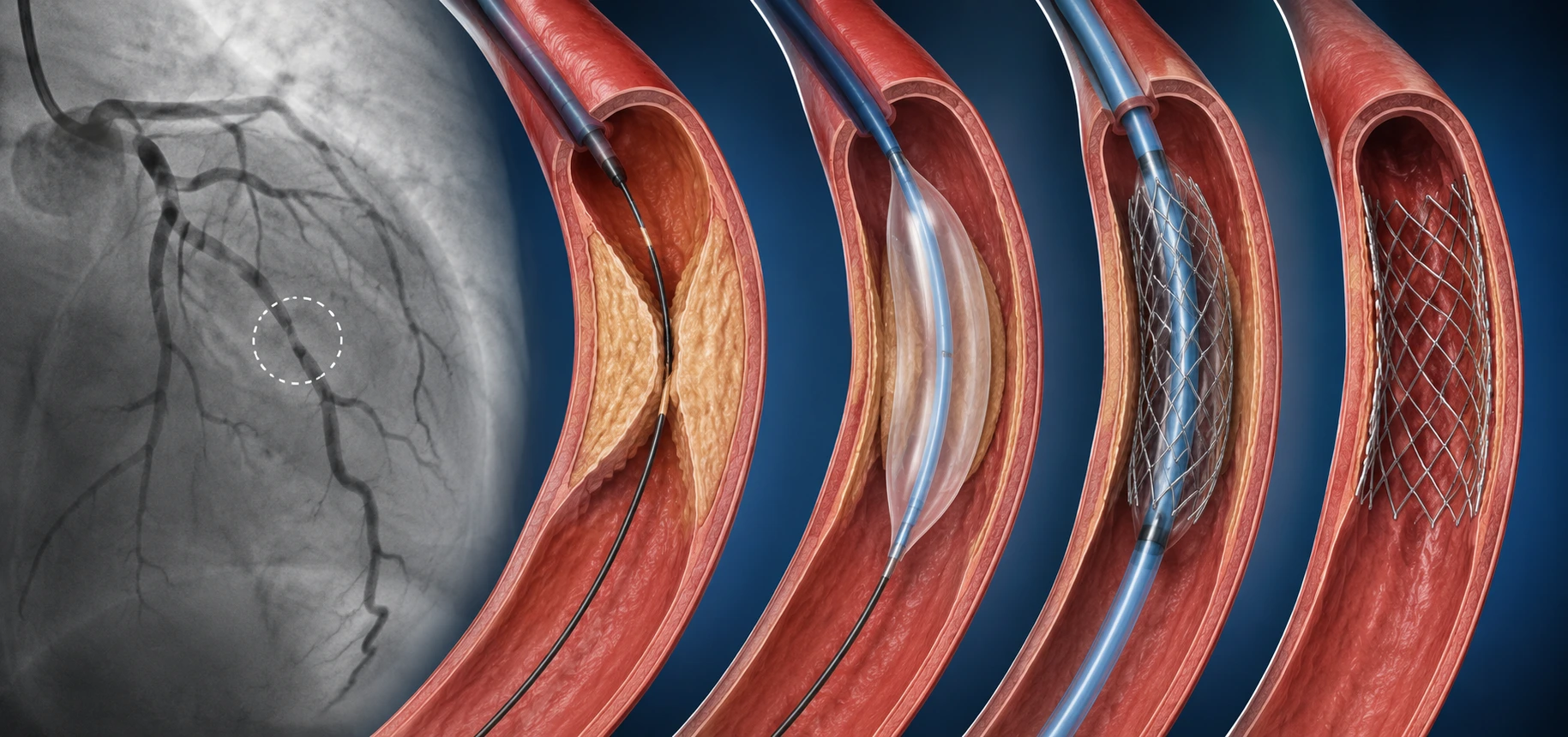
CTO PTCA
CTO PTCA treats a Chronic Total Occlusion, which is a coronary artery that has been completely blocked for a long period and requires advanced recanalisation techniques.
What CTO PTCA Involves
-
The procedure uses specialised wires, support systems, and strategy planning to cross a long-standing blockage.
-
It aims to restore blood flow in arteries that routine angioplasty cannot easily reopen.
-
Careful assessment is needed to balance symptom relief, heart muscle benefit, and procedural complexity.
-
Advanced imaging and operator experience are central to treatment success.
When CTO PTCA May Be Recommended
-
Patients with persistent angina, reduced exercise capacity, or ischemia due to a chronic total blockage.
-
People whose scans show a viable heart muscle region supplied by the blocked artery.
-
Cases where symptoms continue despite medicine and the anatomy is suitable for CTO work.
-
Patients being considered for a minimally invasive alternative to surgery or ongoing symptoms.
Who May Benefit From CTO PTCA
-
Patients with a coronary artery that has remained fully blocked over time.
-
Individuals who need detailed specialist assessment before deciding on complex reopening.
-
People with lifestyle-limiting angina linked to a chronic occlusion.
-
Patients whose treatment goals include symptom improvement and better circulation to viable myocardium.
Benefits of CTO PTCA
-
Supports timely treatment before circulation or heart function worsens.
-
Can improve symptoms, daily comfort, and overall recovery planning.
-
Helps reduce the risk of future cardiac or vascular complications.
-
Offers a structured path toward safer follow-up and better long-term outcomes.
Book a CTO PTCA Consultation
Consult our cardiology team to understand whether CTO PTCA is right for your condition. Timely planning helps improve treatment outcomes, reduce complications, and support smoother recovery and follow-up.
Dr Sandeep's Heart Care Center & Labs is located in Basaveshwaranagar and is easily accessible for patients travelling from Rajajinagar, Vijayanagar, Magadi Road,Malleshwaram, Mahalakshmipuram, Mahakashmi Layout, Peenya, Yeshwanthpur, Nandini Layout, Dasarahalli and surrounding areas who are looking for a cardiologist for ongoing heart disease management, BP control, or preventive cardiac care.
Frequently Asked Questions
What does CTO mean in cardiology?
CTO stands for chronic total occlusion — a coronary artery that has been completely blocked, rather than just narrowed, for a prolonged period. "Chronic" refers to the long-standing nature of the blockage, distinguishing it from a sudden, acute blockage.
What is CTO PTCA?
CTO PTCA is a specialised form of angioplasty used to reopen a chronic total occlusion. Because the artery has been completely blocked for a long time, it typically requires specific guidewires and techniques not usually needed for a routine, partially blocked artery.
Can a completely blocked coronary artery really be treated with angioplasty?
Yes, in selected cases. Specialised CTO-PCI techniques can reopen some long-standing, completely blocked arteries. However, CTO PCI is not automatically suitable for every chronic total occlusion — the decision depends on your anatomy, symptoms, and the amount of viable heart muscle involved.
What symptoms are associated with a chronic total occlusion?
Symptoms can include angina, reduced exercise capacity, or breathlessness, though they vary widely between individuals. Some people have few or no symptoms because the body has formed small natural collateral vessels that partly compensate for the blocked artery over time.
Is CTO angioplasty different from a routine angioplasty?
Yes. Because the artery is completely and often long-term blocked, CTO angioplasty typically requires specialised guidewires, imaging, and sometimes an approach from the opposite direction (retrograde technique) to cross the blockage — steps not usually needed for a partial blockage.
Is bypass surgery (CABG) an alternative to CTO PCI?
Yes, CABG is an established alternative for treating chronic total occlusions, particularly when multiple arteries are affected or anatomy is unsuitable for PCI. The choice between CTO PCI and CABG depends on individual factors assessed by your cardiac team.
What tests are needed before CTO PTCA?
Assessment usually includes your symptom history, an ECG, coronary angiography to map the blockage, and often stress testing or imaging to check whether the heart muscle supplied by the blocked artery is still viable and likely to benefit from treatment.
What are the risks of CTO PTCA?
CTO PTCA is technically more complex than routine angioplasty and carries procedure-specific risks that depend on the individual case and technique used. Your cardiologist will discuss the specific risks and expected benefits relevant to your situation before the procedure.
.png)