-
Follow Us On:
-
-

Lower Limb
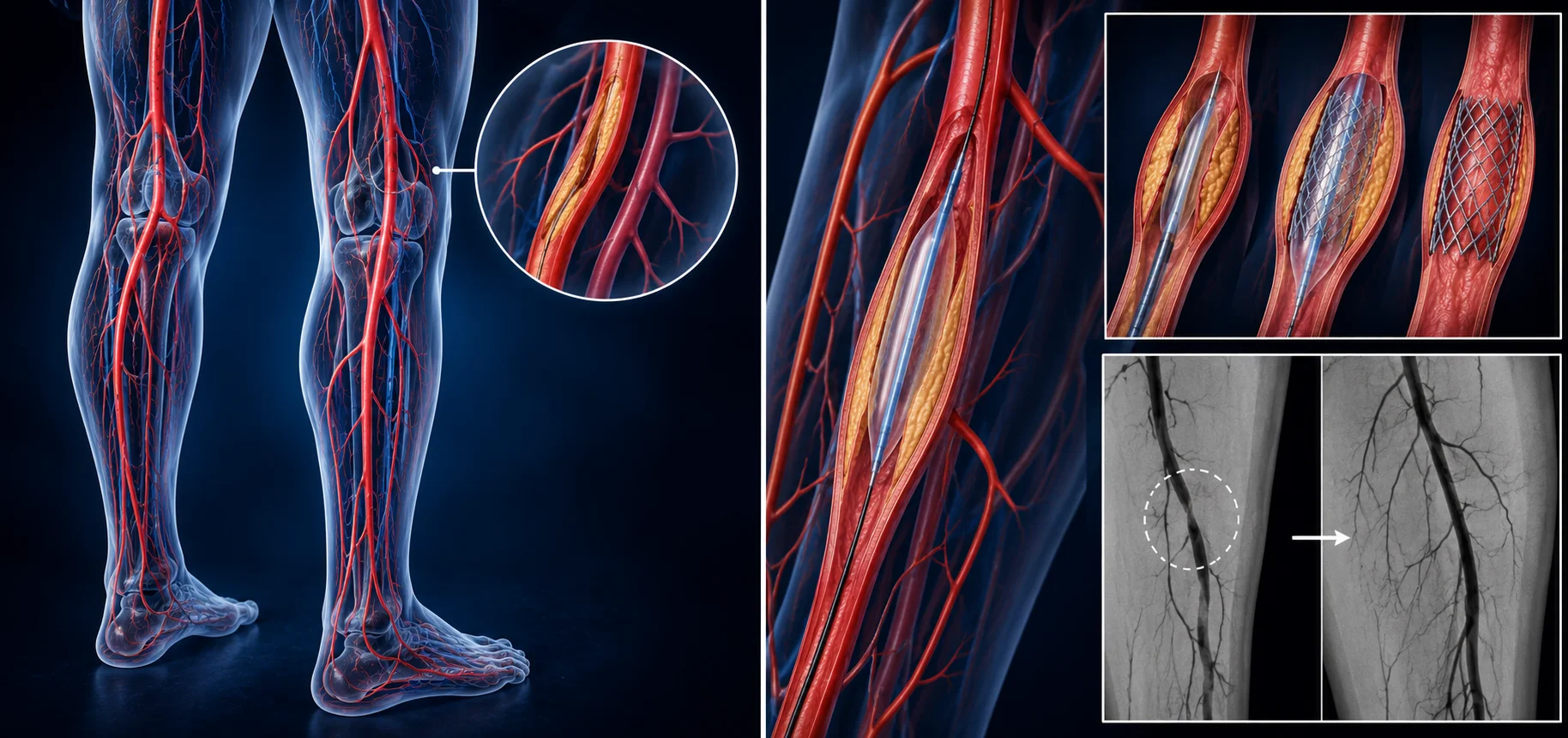
Lower Limb
Lower limb angioplasty treats narrowed leg arteries to improve circulation, reduce walking pain, support wound healing, and protect the limb in advanced peripheral artery disease.
What Lower Limb Involves
-
Angiography helps identify which leg arteries are blocked and how much flow is reduced.
-
Balloon angioplasty and stenting can improve blood flow to the thigh, knee, calf, or foot.
-
Treatment focuses on symptom relief, limb preservation, and better walking capacity.
-
Risk-factor control such as diabetes care, smoking cessation, and cholesterol treatment remains essential.
When Lower Limb May Be Recommended
-
Patients with calf pain while walking, rest pain, or wounds that are slow to heal.
-
People whose Doppler or scan shows significant lower-limb artery narrowing.
-
Cases where reduced circulation threatens mobility or limb health.
-
Patients selected for minimally invasive restoration of leg blood flow.
Who May Benefit From Lower Limb
-
Individuals with diabetes, smoking history, kidney disease, or widespread vascular disease.
-
Patients whose daily life is affected by claudication or circulation-related pain.
-
People at risk of ulcer progression or limb-threatening ischemia.
-
Patients who need structured vascular follow-up along with intervention planning.
Benefits of Lower Limb
-
Supports timely treatment before circulation or heart function worsens.
-
Can improve symptoms, daily comfort, and overall recovery planning.
-
Helps reduce the risk of future cardiac or vascular complications.
-
Offers a structured path toward safer follow-up and better long-term outcomes.
Book a Lower Limb Consultation
Consult our cardiology team to understand whether Lower Limb is right for your condition. Timely planning helps improve treatment outcomes, reduce complications, and support smoother recovery and follow-up.
Dr Sandeep's Heart Care Center & Labs is located in Basaveshwaranagar and is easily accessible for patients travelling from Rajajinagar, Vijayanagar, Magadi Road,Malleshwaram, Mahalakshmipuram, Mahakashmi Layout, Peenya, Yeshwanthpur, Nandini Layout, Dasarahalli and surrounding areas who are looking for a cardiologist for ongoing heart disease management, BP control, or preventive cardiac care.
Frequently Asked Questions
What is lower limb angioplasty?
Lower limb angioplasty is a catheter-based treatment used in selected cases of narrowed or blocked leg arteries, as part of managing peripheral artery disease (PAD). A balloon, and sometimes a stent, is used to widen the affected artery and improve blood flow to the leg or foot.
What is peripheral artery disease (PAD)?
Peripheral artery disease means reduced blood flow to the limbs, most often the legs, usually caused by atherosclerosis — a buildup of fatty plaque within the artery walls. It can range from mild, with few symptoms, to severe, threatening the health of the limb.
What are the symptoms of peripheral artery disease?
Common symptoms include leg pain or cramping during walking that eases with rest (claudication), reduced walking distance, and cold feet. More serious signs, such as pain at rest, non-healing wounds, or skin colour changes, need prompt medical assessment.
What causes blocked arteries in the legs?
Blocked leg arteries are most often caused by atherosclerosis, a buildup of fatty plaque within the artery walls. Risk factors include smoking, diabetes, high blood pressure, high cholesterol, and age, particularly in people with established cardiovascular disease.
How is peripheral artery disease diagnosed?
Diagnosis typically starts with a clinical examination and pulse assessment, followed by tests such as the ankle-brachial index (ABI), Doppler ultrasound, CT angiography, or MR angiography, and sometimes catheter angiography, depending on what further evaluation is needed.
What is the difference between angioplasty and bypass surgery for leg arteries?
Angioplasty is a catheter-based, minimally invasive approach that widens the artery from within. Bypass surgery creates a new path for blood flow around the blockage using a graft. The right choice depends on the blockage's location, length, and severity, and your overall health.
Can lifestyle changes help peripheral artery disease?
Yes. Smoking cessation, diabetes management, blood pressure and cholesterol control, and supervised exercise are all important parts of managing PAD, whether alongside angioplasty or as part of ongoing medical treatment. Your care team can guide a plan suited to you.
How long does recovery take after lower limb angioplasty?
Recovery time varies depending on the individual, the extent of the blockage treated, and how the procedure was performed. Your cardiologist will advise on activity levels, wound care where relevant, and the follow-up schedule specific to your case.
.png)