-
Follow Us On:
-
-

Holter Monitoring
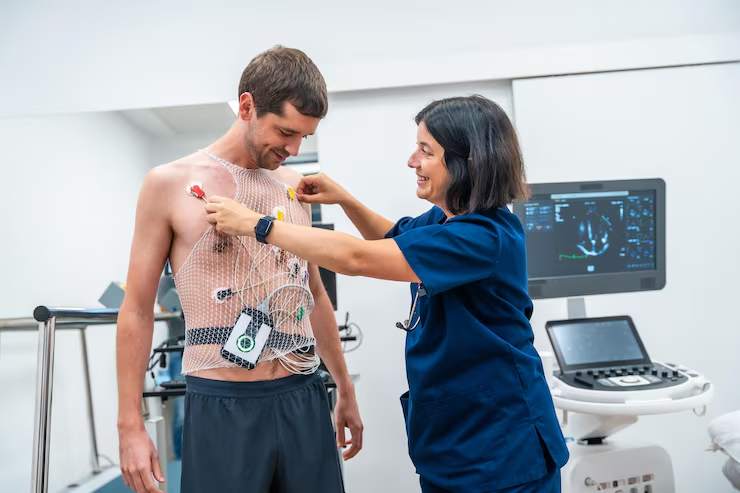
Holter Monitoring (24-Hour ECG) for Palpitations and Irregular Heartbeat
Holter Monitoring records the heart rhythm continuously for 24 hours or longer so intermittent rhythm problems can be detected during normal daily activity.
Holter monitoring is a portable ECG recorder worn during normal daily activities to record heart rhythm continuously for 24 hours or longer. A cardiologist may recommend it for palpitations, dizziness or blackouts that come and go, when a short resting ECG in the clinic may not capture the problem.
What Holter Monitoring Evaluates
-
Captures episodes that may not appear during a brief ECG in the clinic.
-
Correlates symptoms such as palpitations or dizziness with rhythm changes.
-
Helps detect extra beats, pauses, slow rhythm, fast rhythm, or silent arrhythmia.
-
Is useful both for diagnosis and for checking how treatment is working over time.
When Holter Monitoring Is Recommended
-
Palpitations, skipped beats, dizziness, blackouts, or unexplained weakness.
-
Suspected arrhythmia with normal routine ECG but continuing symptoms.
-
Follow-up after rhythm treatment, pacemaker review, or medicine adjustment.
-
Evaluation of silent rhythm disturbance in high-risk patients.
Who May Benefit From Holter Monitoring
-
Patients whose symptoms happen intermittently rather than constantly.
-
People with recurrent fainting or near-fainting episodes.
-
Individuals with known rhythm disorders who need response tracking.
-
Patients whose cardiologist needs longer rhythm surveillance during normal routine.
Benefits of Holter Monitoring
-
Provides clearer diagnosis and more confident treatment decisions.
-
Helps identify heart problems earlier, before symptoms become serious.
-
Reduces uncertainty when chest pain, breathlessness, or palpitations need explanation.
-
Guides follow-up care, medication changes, and preventive heart planning.
Book a Holter Monitoring Evaluation
Consult Dr Sandeep's Heart Care Center & Labs to know whether Holter Monitoring is the right next step for your symptoms or ongoing heart condition. Timely rhythm recording helps clarify diagnosis, guide treatment, and support safer follow-up care.
Dr Sandeep's Heart Care Center & Labs is located in Basaveshwaranagar and is easily accessible for patients travelling from Rajajinagar, Vijayanagar, Magadi Road,Malleshwaram, Mahalakshmipuram, Mahakashmi Layout, Peenya, Yeshwanthpur, Nandini Layout, Dasarahalli and surrounding areas who are looking for a cardiologist for ongoing heart disease management, BP control, or preventive cardiac care.
Dr Sandeep's Heart Care Center & Labs is located in Basaveshwaranagar and is easily accessible for patients travelling from Rajajinagar, Vijayanagar, Magadi Road,Malleshwaram, Mahalakshmipuram, Mahakashmi Layout, Peenya, Yeshwanthpur, Nandini Layout, Dasarahalli and surrounding areas who are looking for a cardiologist for ongoing heart disease management, BP control, or preventive cardiac care.
Frequently Asked Questions
Is Holter monitoring painful?
Holter monitoring is painless. Small electrode stickers are placed on your chest and connected to a lightweight recorder. Some people feel mild skin irritation from the stickers. There are no needles or injections. Tell the staff if the stickers itch or loosen.
Can I bathe or shower while wearing a Holter monitor?
The recorder is usually not waterproof, so you will normally be told to keep it dry. Ask the staff for specific bathing instructions when it is fitted. Following these instructions helps avoid interruptions or poor-quality recording during the monitoring period.
Can I go to work and follow my usual routine?
In most cases yes, because the aim is to record your heart rhythm during normal daily activities. Your cardiologist or technician may ask you to avoid certain situations, so follow the instructions you receive when the monitor is fitted.
What is a symptom diary and why is it important?
A symptom diary is a note of the time you feel palpitations, dizziness or other symptoms, and what you were doing then. The cardiologist compares these entries with the recorded rhythm to see whether your symptoms were linked to an arrhythmia.
What if I have no symptoms during the Holter recording?
A recording without symptoms can still be useful because it may detect silent rhythm changes. However, if your symptoms are infrequent, a short recording may miss them. Your cardiologist may then advise repeating or extending the monitoring. Do not stop wearing the device early without advice.
How are Holter results reported?
The recording is analysed and reviewed by a doctor. A report generally summarises heart rate range, extra beats, pauses or fast rhythms, and how they relate to the symptoms you noted. Your cardiologist explains what the findings mean for you.
Does a normal Holter rule out an arrhythmia?
No. A normal Holter means no significant rhythm problem was recorded during that period. If symptoms occur rarely, they may not have happened while you wore the monitor, so more monitoring or other tests may still be considered.
Can a smartwatch replace Holter monitoring?
Some smartwatches can flag an irregular pulse or record a simple ECG strip, which may prompt you to see a doctor. They are not a substitute for medically supervised monitoring when a cardiologist needs a full, analysed rhythm recording. Bring any smartwatch recordings to your consultation.
.png)