-
Follow Us On:
-
-

Complex Coronary Interventions
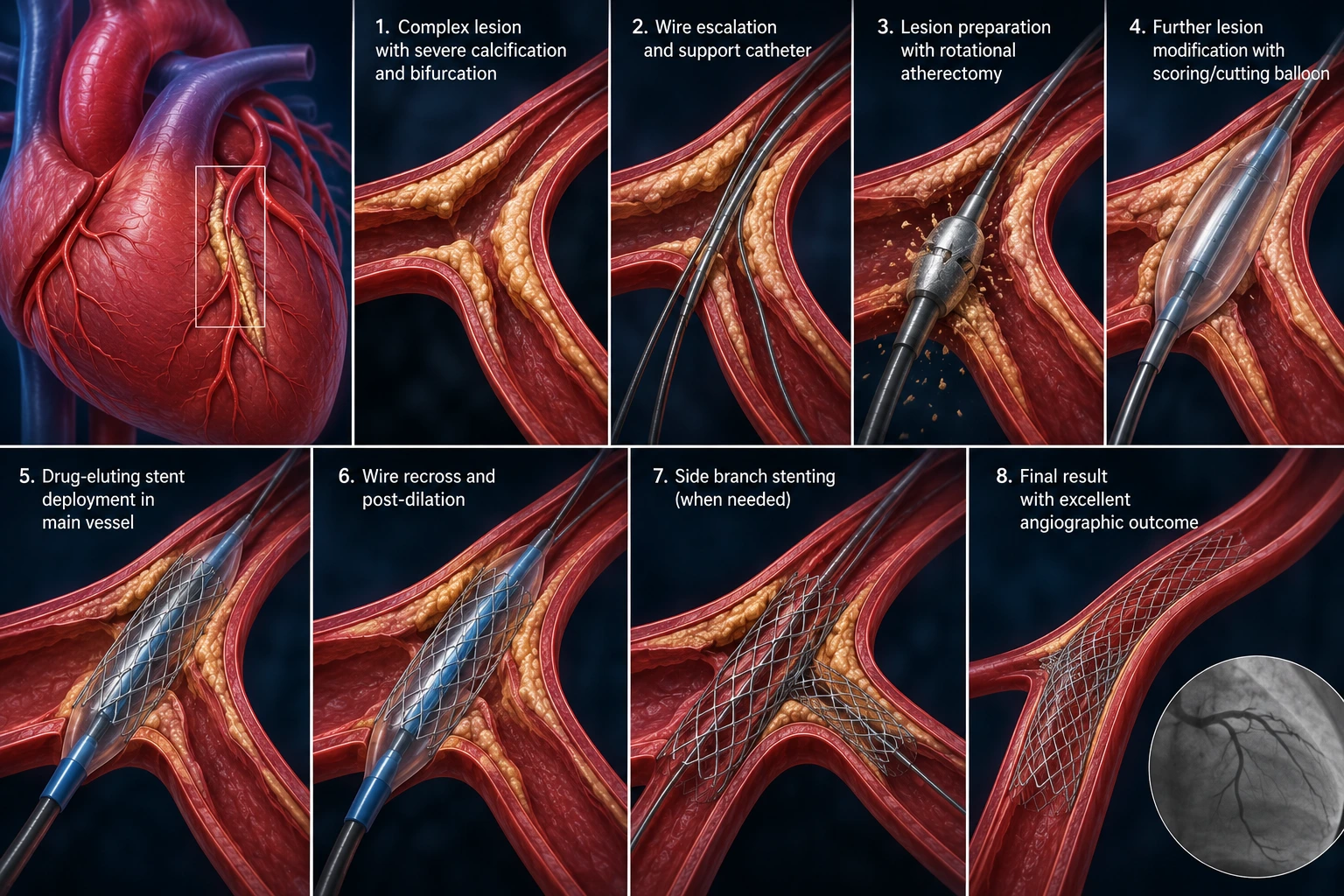
Complex Coronary Interventions in Bangalore
Complex coronary interventions are advanced angioplasty procedures used to treat difficult and high-risk coronary blockages that require specialized expertise and equipment. These procedures help patients with severe, heavily calcified, or long-standing blockages avoid or delay open-heart bypass surgery through precise, catheter-based techniques.
Key Complex Coronary Interventions We Offer
-
Left Main PTCA: Specialized angioplasty performed on the left main coronary artery, which supplies a large portion of the heart muscle.
-
Bifurcation PTCA: Treats blockages located at the point where a coronary artery splits into two branches using specialized stenting techniques.
-
CTO PTCA: Opens Chronic Total Occlusions, arteries that have been completely blocked for an extended period, restoring blood flow to the heart.
-
Calcium Modification - Rotablation: Uses a rotating device to break down heavily calcified plaque so a stent can be placed effectively.
-
Calcium Modification - Orbital Atherectomy: An advanced technique that modifies calcified artery walls to allow safer stent placement in difficult blockages.
Why Complex Coronary Interventions Are Important
-
Treat blockages that standard angioplasty cannot address.
-
Offer an alternative to open-heart bypass surgery.
-
Restore blood flow in severely calcified or blocked arteries.
-
Reduce chest pain and improve heart function.
-
Lower the long-term risk of heart attack.
Who May Need a Complex Coronary Intervention
-
Patients with a blockage in the left main artery.
-
Patients with a chronic total occlusion.
-
Patients with heavily calcified coronary arteries.
-
Patients with blockages at arterial branch points.
-
Patients unsuitable or not preferring bypass surgery.
Benefits of Advanced Coronary Intervention
-
Minimally invasive alternative to open-heart surgery.
-
Faster recovery and shorter hospital stay.
-
High success rates with experienced specialists.
-
Improved blood flow and reduced cardiac symptoms.
-
Better long-term heart health and quality of life.
Book a Complex Coronary Intervention Consultation
Consult our interventional cardiology team to evaluate whether Left Main PTCA, Bifurcation PTCA, CTO PTCA, Rotablation, or Orbital Atherectomy is the right treatment for your coronary blockage. Advanced planning and expertise ensure the safest and most effective outcome.
Dr Sandeep's Heart Care Center & Labs is located in Basaveshwaranagar and is easily accessible for patients travelling from Rajajinagar, Vijayanagar, Magadi Road,Malleshwaram, Mahalakshmipuram, Mahakashmi Layout, Peenya, Yeshwanthpur, Nandini Layout, Dasarahalli and surrounding areas who are looking for a cardiologist for ongoing heart disease management, BP control, or preventive cardiac care.
Frequently Asked Questions
Why can't every blocked artery be treated with a standard angioplasty?
Standard angioplasty works well for straightforward blockages, but arteries that are heavily calcified, located at the left main artery, positioned at a branch point, or completely blocked for a long time need specialised technique and equipment, which is why they are classified as complex coronary interventions.
What happens if a CTO is left untreated?
A chronic total occlusion may continue to limit blood flow to part of the heart muscle, potentially contributing to ongoing symptoms or reduced heart function over time. Whether treatment is needed, and when, depends on individual symptoms and findings assessed by your cardiologist.
Is Rotablation painful for the patient?
Rotablation is performed under the same catheter-based approach as angioplasty, typically with sedation and local anaesthesia at the access site, so patients generally do not feel the procedure itself. Your interventional cardiologist can explain what to expect based on your specific case.
How is Orbital Atherectomy different from Rotablation?
Both are calcium modification techniques used to prepare heavily calcified plaque for stenting, but they use different mechanisms — Rotablation uses a rotating burr, while Orbital Atherectomy uses an eccentrically rotating device. Your cardiologist chooses the technique best suited to your artery's specific calcification pattern.
Do complex coronary interventions require a longer hospital stay?
Hospital stay can vary depending on the complexity of the blockage and the specific technique used, but many patients still benefit from a shorter recovery compared with open-heart bypass surgery. Your cardiology team will give you a realistic estimate based on your procedure.
Can I get a second opinion before undergoing a complex coronary intervention?
Yes, seeking a second opinion for advanced procedures like Left Main PTCA, CTO PTCA, or Rotablation is a reasonable step, especially given the technical complexity involved. Bringing your existing angiogram and test reports helps the reviewing cardiologist give informed input.
Are complex coronary interventions suitable for elderly patients?
Age alone does not automatically rule out a complex coronary intervention, but overall health, kidney function, and other medical conditions are carefully considered. Your interventional cardiologist evaluates individual suitability rather than applying a blanket age limit.
What imaging or planning is used before a complex coronary intervention?
Planning usually starts with a detailed coronary angiogram to map the blockage, and in select complex cases, intravascular imaging such as IVUS or OCT may be used to better understand plaque characteristics before deciding on the exact interventional technique.
.png)