-
Follow Us On:
-
-

Calcium Modification - Orbital Atherectomy
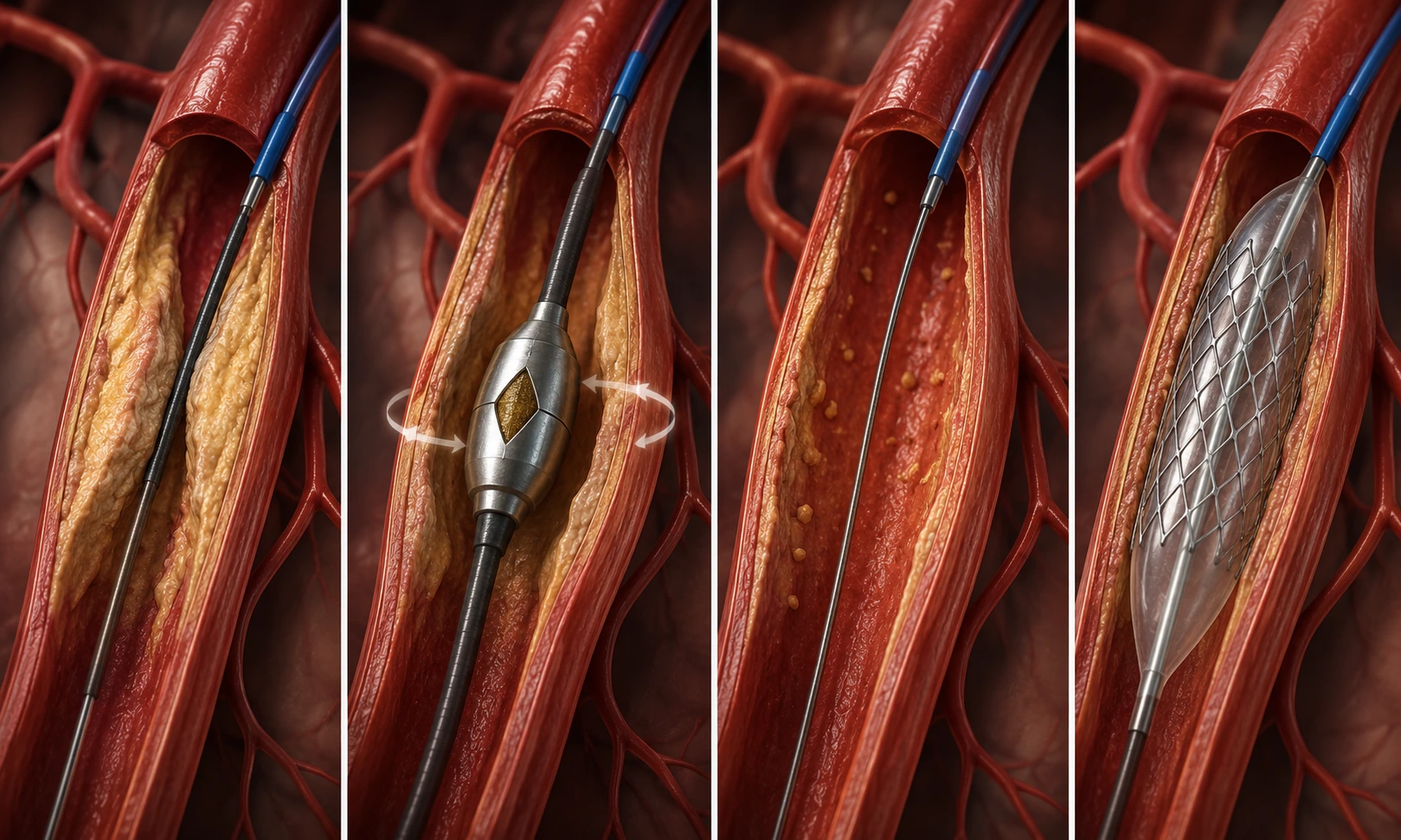
Orbital Atherectomy for Calcified Coronary Blockages in Basaveshwaranagar
Orbital Atherectomy is an advanced calcium modification technique that prepares severely calcified coronary arteries for safer and more effective stent treatment.
What Calcium Modification - Orbital Atherectomy Involves
-
The device modifies calcified plaque using orbital motion to improve vessel preparation.
-
It helps create better lesion compliance before ballooning and stent expansion.
-
This strategy is valuable when calcium burden makes routine angioplasty technically unsafe or inadequate.
-
Specialist planning is needed to match the technique to the artery anatomy and plaque pattern.
When Calcium Modification - Orbital Atherectomy May Be Recommended
-
Patients with severe coronary calcium on imaging or angiography.
-
Cases where the lesion must be modified before successful stent placement can happen.
-
People undergoing complex PCI in whom vessel preparation is essential.
-
Patients whose coronary anatomy is suitable for orbital plaque modification.
Who May Benefit From Calcium Modification - Orbital Atherectomy
-
Patients with difficult calcified lesions that need advanced preparation.
-
Individuals who may benefit from improved stent delivery and expansion.
-
People whose symptoms are linked to high-burden calcific coronary disease.
-
Patients selected for complex coronary intervention by experienced operators.
Benefits of Calcium Modification - Orbital Atherectomy
-
Supports timely treatment before circulation or heart function worsens.
-
Can improve symptoms, daily comfort, and overall recovery planning.
-
Helps reduce the risk of future cardiac or vascular complications.
-
Offers a structured path toward safer follow-up and better long-term outcomes.
Book a Calcium Modification - Orbital Atherectomy Consultation
Consult our cardiology team to understand whether Calcium Modification - Orbital Atherectomy is right for your condition. Timely planning helps improve treatment outcomes, reduce complications, and support smoother recovery and follow-up.
Dr Sandeep's Heart Care Center & Labs is located in Basaveshwaranagar and is easily accessible for patients travelling from Rajajinagar, Vijayanagar, Magadi Road,Malleshwaram, Mahalakshmipuram, Mahakashmi Layout, Peenya, Yeshwanthpur, Nandini Layout, Dasarahalli and surrounding areas who are looking for a cardiologist for ongoing heart disease management, BP control, or preventive cardiac care.
Frequently Asked Questions
What is Orbital Atherectomy?
Orbital Atherectomy is a calcium-modification technique used in selected heavily calcified coronary lesions. A device using an eccentric, rotating motion modifies rigid calcium within the artery wall, helping prepare the vessel so that balloon angioplasty and stent placement can be carried out more effectively.
What is coronary artery calcification?
Coronary artery calcification is the buildup of calcium within the artery wall, alongside fatty plaque, over time. This can make a blockage hard and rigid, which can make it more difficult to treat with standard balloon angioplasty and stenting alone.
Is Orbital Atherectomy the same as angioplasty?
No. Orbital Atherectomy is a preparation technique used before balloon angioplasty and stent placement, specifically for lesions with heavy calcium buildup. It modifies the calcium so the subsequent angioplasty and stenting steps can be performed more effectively.
When is Orbital Atherectomy considered?
Orbital Atherectomy is considered in selected cases where angiography or intravascular imaging shows severe coronary calcification that may make standard balloon preparation inadequate. Not every calcified lesion needs this technique — the decision is based on individual findings and clinical judgement.
Is Orbital Atherectomy the same as Rotablation?
No, though both are calcium-modification techniques used before stenting. Orbital Atherectomy uses a device with an eccentric, rotating motion, while Rotablation uses a high-speed rotational burr. The choice between them depends on the specific lesion and clinical assessment.
What imaging is used to assess coronary calcification?
Coronary angiography provides an initial view of the blockage, while intravascular imaging techniques such as IVUS or OCT can give a more detailed picture of the extent and pattern of calcium, helping guide the treatment plan.
Is Orbital Atherectomy suitable for every patient with a calcified blockage?
No. Suitability depends on the specific pattern and severity of calcification, the artery's anatomy, and the patient's overall clinical picture. Your cardiologist will assess whether this technique, an alternative approach, or standard angioplasty is appropriate for your case.
What are the risks of Orbital Atherectomy?
Like other complex coronary procedures, Orbital Atherectomy carries procedure-specific risks that vary depending on the extent of calcification and coronary anatomy. Your cardiologist will explain the risks relevant to your individual case before proceeding with treatment.
.png)