-
Follow Us On:
-
-

Renal
Renal
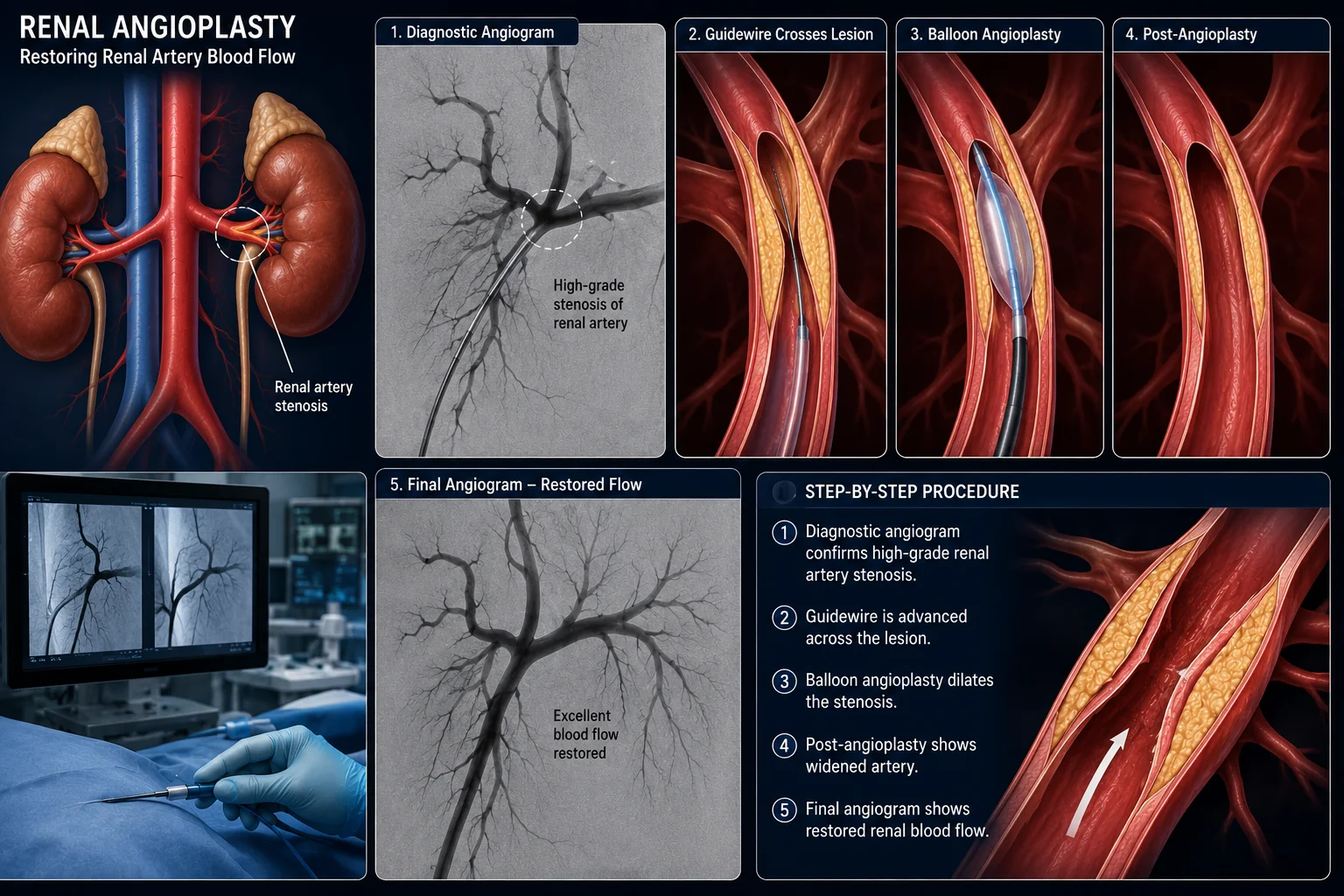
Renal angioplasty treats narrowing in the arteries supplying the kidneys, especially when reduced blood flow contributes to difficult blood pressure control or kidney function decline.
What Renal Involves
-
Imaging is used to confirm renal artery stenosis and judge whether intervention may help.
-
Angioplasty can improve blood supply to the kidney in selected patients with significant narrowing.
-
Treatment planning considers blood pressure pattern, kidney function, and the severity of stenosis.
-
Medicines and risk-factor control remain essential before and after any vascular procedure.
When Renal May Be Recommended
-
Patients with resistant hypertension despite multiple medicines.
-
People with worsening kidney function when renal artery narrowing is suspected or proven.
-
Cases where imaging shows significant stenosis that matches the clinical picture.
-
Patients selected for minimally invasive restoration of renal artery flow.
Who May Benefit From Renal
-
Individuals with vascular disease affecting multiple arterial territories.
-
Patients whose blood pressure or kidney profile remains difficult to manage.
-
People needing detailed review by a specialist before deciding on intervention.
-
Patients who may benefit when medical therapy alone is not enough.
Benefits of Renal
-
Supports timely treatment before circulation or heart function worsens.
-
Can improve symptoms, daily comfort, and overall recovery planning.
-
Helps reduce the risk of future cardiac or vascular complications.
-
Offers a structured path toward safer follow-up and better long-term outcomes.
Book a Renal Consultation
Consult our cardiology team to understand whether Renal is right for your condition. Timely planning helps improve treatment outcomes, reduce complications, and support smoother recovery and follow-up.
Dr Sandeep's Heart Care Center & Labs is located in Basaveshwaranagar and is easily accessible for patients travelling from Rajajinagar, Vijayanagar, Magadi Road,Malleshwaram, Mahalakshmipuram, Mahakashmi Layout, Peenya, Yeshwanthpur, Nandini Layout, Dasarahalli and surrounding areas who are looking for a cardiologist for ongoing heart disease management, BP control, or preventive cardiac care.
Frequently Asked Questions
What is renal angioplasty?
Renal angioplasty is a catheter-based procedure used in selected cases of renal artery narrowing (stenosis), particularly when it contributes to difficult-to-control blood pressure or affects kidney blood flow. A balloon, and sometimes a stent, is used to widen the narrowed artery.
What is renal artery stenosis?
Renal artery stenosis means narrowing of one or both arteries supplying blood to the kidneys, most commonly due to atherosclerosis. This can reduce blood flow to the kidney and, in some cases, contribute to high blood pressure or affect kidney function.
Can renal artery stenosis cause high blood pressure?
Yes, in some cases renal artery stenosis can contribute to high blood pressure, particularly hypertension that is difficult to control with multiple medicines. However, high blood pressure has many possible causes, so imaging and clinical evaluation are needed to confirm renal artery stenosis as a contributing factor.
Does renal angioplasty cure high blood pressure?
No. Renal angioplasty may help improve blood pressure control in selected patients, but it does not guarantee normalization or a cure. Most patients continue to need blood pressure medication and lifestyle-based risk factor management after the procedure.
How is renal artery stenosis diagnosed?
Diagnosis typically involves blood pressure evaluation, kidney function blood tests, and imaging such as Doppler ultrasound, CT angiography, or MR angiography. These diagnostic steps help confirm the presence and severity of renal artery narrowing before any treatment decision.
Is renal angioplasty suitable for everyone with renal artery narrowing?
No. Suitability depends on matching your imaging findings with your clinical picture — such as how your blood pressure or kidney function is responding to medical treatment — and is decided individually by your specialist.
Can renal angioplasty improve kidney function?
In selected patients, renal angioplasty may help support kidney blood flow, but it does not guarantee recovery of kidney function, particularly if kidney damage is already significant or longstanding. Your cardiologist will discuss realistic expectations for your specific situation.
What follow-up is needed after renal angioplasty?
Follow-up typically includes ongoing blood pressure monitoring, periodic kidney function tests, continued prescribed medication, and management of vascular risk factors such as cholesterol and diabetes, since these all influence long-term outcomes alongside the procedure itself.
.png)