-
Follow Us On:
-
-

INUS / OCT
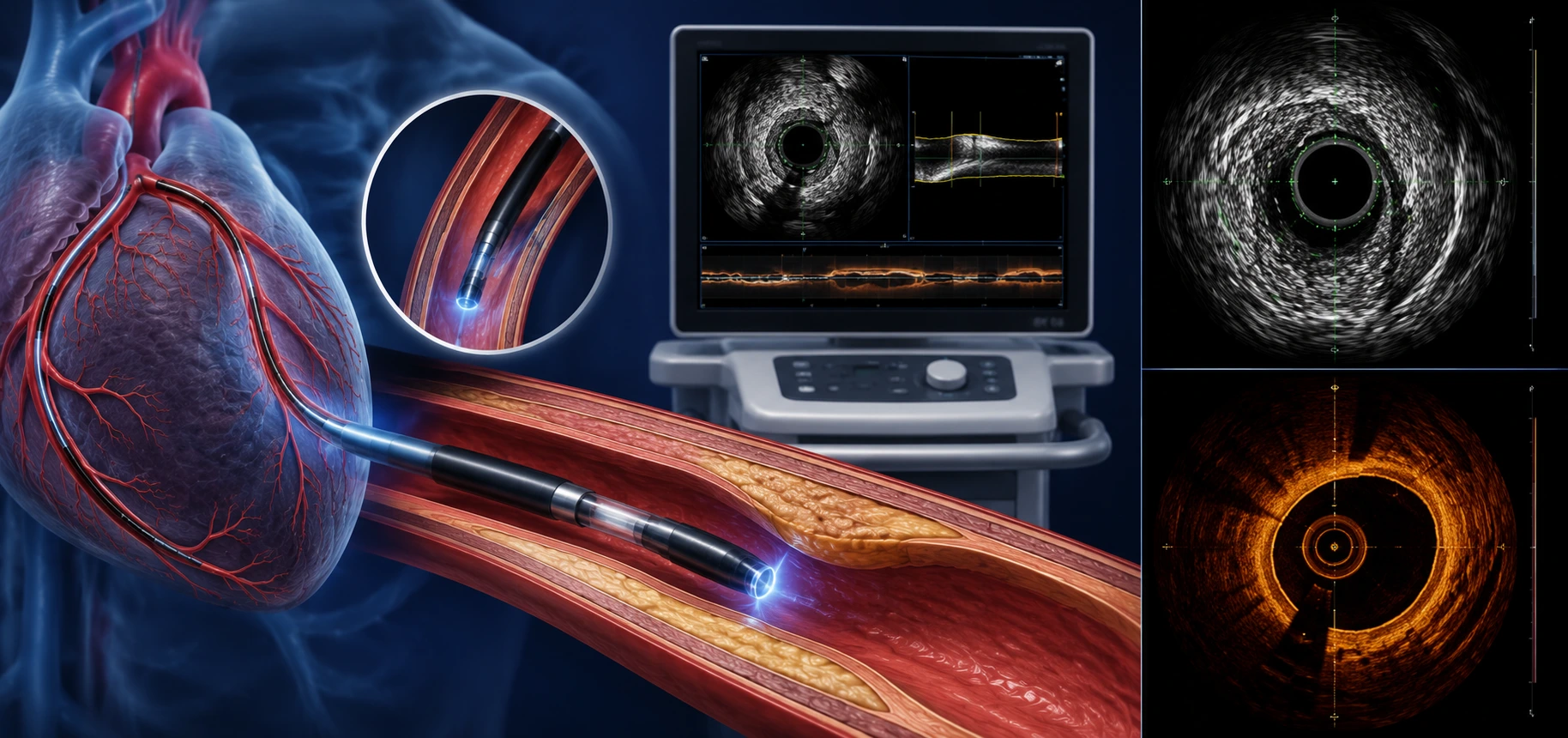
What Is IVUS/OCT? A Simple Guide to Intravascular Imaging
INUS / OCT refers to intravascular imaging techniques that help cardiologists visualise the inside of an artery in far greater detail than angiography alone during coronary procedures. IVUS and OCT are intravascular imaging techniques that let a cardiologist see inside a coronary artery in more detail than a standard angiogram.
What INUS / OCT Evaluates
-
These techniques help assess plaque pattern, calcium, vessel size, and stent landing zones.
-
They provide detailed information about why a blockage is difficult or how best to treat it.
-
Intravascular imaging can guide lesion preparation, stent sizing, and optimisation.
-
It is especially useful in complex angioplasty where precision affects outcome.
When INUS / OCT Is Recommended
-
Complex coronary lesions, uncertain vessel size, or difficult plaque characteristics.
-
Cases where angiography alone does not fully explain lesion severity or stent result.
-
Patients undergoing advanced PCI where accurate internal vessel detail is important.
-
Situations where post-stent optimisation needs deeper imaging guidance.
Who May Benefit From INUS / OCT
-
Patients with calcified, long, bifurcation, or left main coronary disease.
-
Individuals undergoing complex procedures that demand precise stent planning.
-
People whose coronary anatomy needs better definition than routine angiography provides.
-
Patients in whom imaging-guided PCI may improve procedural safety and effectiveness.
Benefits of INUS / OCT
-
Provides clearer diagnosis and more confident treatment decisions.
-
Helps identify heart problems earlier, before symptoms become serious.
-
Reduces uncertainty when chest pain, breathlessness, or palpitations need explanation.
-
Guides follow-up care, medication changes, and preventive heart planning.
Book a INUS / OCT Evaluation
Consult Dr Sandeep's Heart Care Center & Labs to know whether INUS / OCT is the right next step for your symptoms or ongoing heart condition. Timely testing helps clarify diagnosis, guide treatment, and support safer follow-up care.
Dr Sandeep's Heart Care Center & Labs is located in Basaveshwaranagar and is easily accessible for patients travelling from Rajajinagar, Vijayanagar, Magadi Road,Malleshwaram, Mahalakshmipuram, Mahakashmi Layout, Peenya, Yeshwanthpur, Nandini Layout, Dasarahalli and surrounding areas who are looking for a cardiologist for ongoing heart disease management, BP control, or preventive cardiac care.
Frequently Asked Questions
Is "INUS" the same as "IVUS"?
Yes. IVUS (Intravascular Ultrasound) is the correct clinical term. It refers to the same intravascular imaging concept described on this page.
What is the simplest way to understand IVUS/OCT?
Think of IVUS and OCT as tools that let your cardiologist look at your artery from the inside, providing more detail about plaque and vessel size than a standard angiogram alone.
Will I definitely need this imaging during my procedure?
Not necessarily. Whether IVUS or OCT is used depends on the complexity of your blockage and is decided by your cardiologist based on your specific case.
Is this imaging painful or does it add significant time to my procedure?
IVUS and OCT are performed through the same catheter access already used for your procedure, so they typically add limited additional time and are not separately painful.
Where can I learn more about how this imaging is used in a real procedure?
Our Intravascular Imaging and IVUS/OCT pages explain in more detail how this imaging supports complex coronary intervention and stent placement.
.png)