
Diabetes and Your Heart: Why Blood Sugar Control Matters Beyond the HbA1c Report
Many people with diabetes know their HbA1c number by heart. It sits at the top of the lab report, it is discussed at every review, and it often feels like the final verdict on how well diabetes is being managed. The heart, however, is affected by more than one number. For families looking for information on diabetes and heart disease in Basaveshwar Nagar and across Bengaluru, the central message is this: diabetes affects blood vessels throughout the body, so heart health deserves attention even when blood sugar readings look satisfactory and you feel perfectly well.
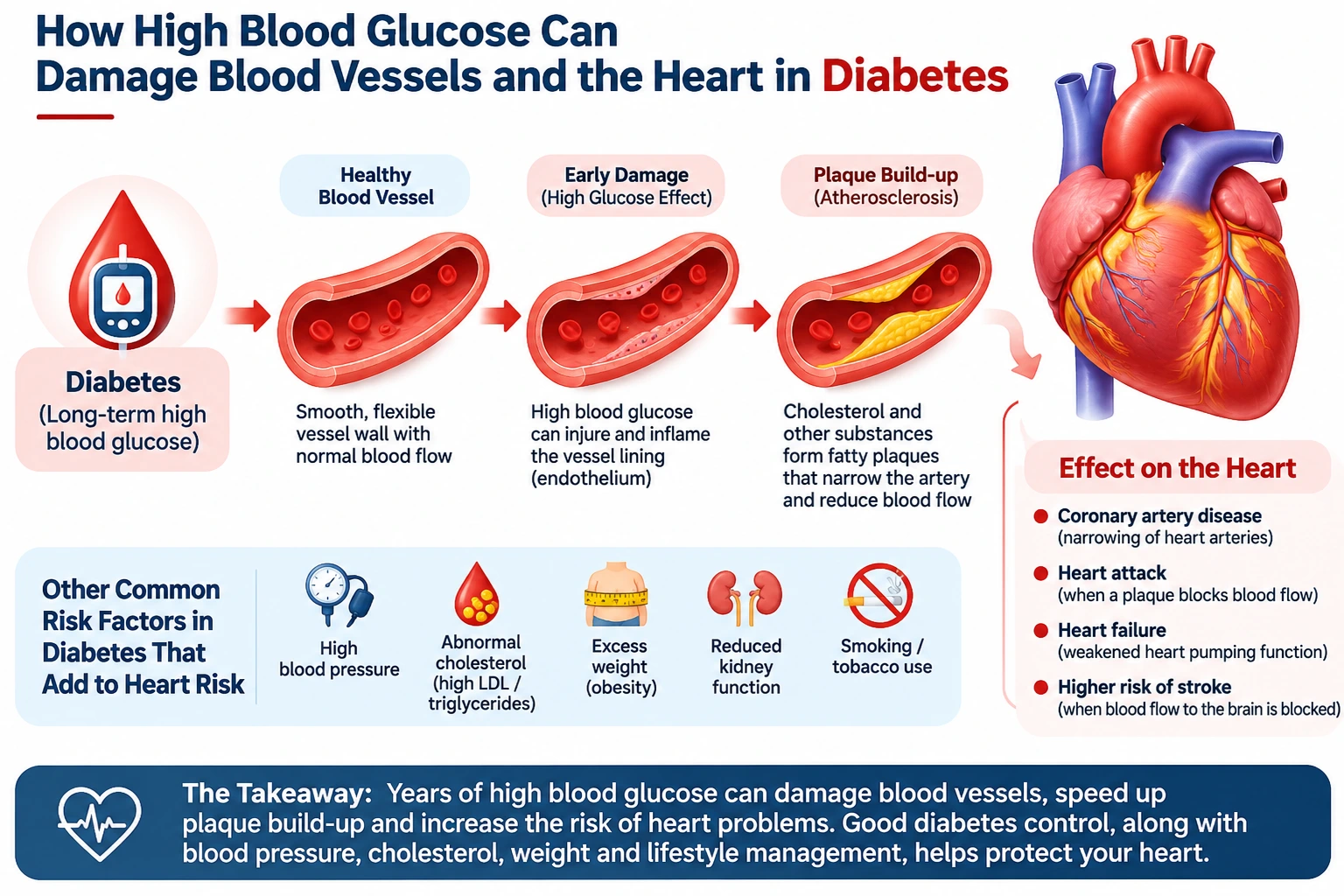
People with diabetes are more likely to develop cardiovascular conditions such as coronary artery disease, heart attack, stroke and heart failure than people without diabetes. Years of raised blood glucose can injure the inner lining of arteries, and diabetes often travels with other risks: high blood pressure, abnormal cholesterol, excess weight and reduced kidney function. None of this means heart disease is inevitable. It means cardiovascular risk should be looked at as a whole, and early, because changes in the blood vessels often cause no symptoms for years.
HbA1c shows your average blood glucose over roughly the past two to three months. It does not show blood pressure, cholesterol, kidney function, smoking, weight, family history or whether the heart arteries have already narrowed. Diabetes care should therefore include an individual cardiovascular risk assessment, not HbA1c monitoring alone.
How Are Diabetes and Heart Disease Connected?
Understanding the link explains why doctors look beyond sugar levels, and why heart problems in diabetics feature so often in routine diabetes care.
Blood vessel damage. When glucose stays high for long periods, the thin inner lining of blood vessels can become damaged and inflamed. Damaged walls attract cholesterol and other substances, which slowly form fatty plaques. This process is called atherosclerosis.
Insulin resistance and metabolic changes. In type 2 diabetes the body responds poorly to insulin. This often comes with raised triglycerides, lower HDL (“good”) cholesterol, higher blood pressure and abdominal weight gain, all of which strain the cardiovascular system.
Coronary artery disease. As plaques build up in the arteries supplying the heart muscle, blood flow can fall, especially during exertion. In some people with diabetes this process starts earlier or progresses faster.
Heart attack, stroke and heart failure. A plaque that suddenly cracks can trigger a clot that blocks blood flow, causing a heart attack or stroke. Over time, diabetes can also affect the heart muscle itself and raise the chance of heart failure.
Risk differs widely from one person to another. It depends on how long someone has had diabetes, age, blood pressure, cholesterol, kidney health, tobacco use, family history and how well each of these is controlled.
Why HbA1c Alone Does Not Tell the Complete Heart Health Story
HbA1c (glycated haemoglobin) measures the share of haemoglobin in red blood cells that has glucose attached. Red blood cells live for about three months, so the result reflects average blood glucose over approximately the previous two to three months. It is a very useful number for judging whether current treatment is working.
But HbA1c and heart risk are not the same question. A satisfactory HbA1c does not automatically mean low cardiovascular risk, because:
- It is an average, so it can hide day-to-day swings, such as high readings after meals or episodes of low sugar.
- It says nothing about blood pressure, which can quietly damage arteries.
- It does not show LDL cholesterol or triglycerides.
- It does not reflect kidney function, which is closely tied to heart risk.
- It cannot capture smoking or tobacco use, weight, family history or existing artery narrowing.
- In some people, conditions such as anaemia or kidney disease can make HbA1c less reliable.
HbA1c targets should also be individual. What suits a 45-year-old with recently diagnosed diabetes may differ from what suits an older person with long-standing diabetes or other illnesses. Your treating doctor sets the target that balances benefit and safety for you. The American Diabetes Association describes managing blood glucose, blood pressure and lipids together as a fundamental part of reducing cardiovascular risk in diabetes.
Heart Problems in Diabetics: What Complications Should You Know About?
Not everyone with diabetes will develop these conditions. Knowing about them simply helps you recognise when to ask questions.
Coronary Artery Disease
Fatty deposits can narrow the coronary arteries and reduce blood and oxygen supply to the heart muscle. This may cause chest discomfort or breathlessness on exertion, although in people with diabetes symptoms can be mild or even absent. You can read more about coronary artery disease .
Heart Attack
A heart attack happens when blood flow to part of the heart muscle is suddenly blocked, usually by a clot on a ruptured plaque. Diabetes is an important risk factor, especially when combined with high blood pressure, abnormal cholesterol or smoking.
Heart Failure
Heart failure does not mean the heart has stopped. It means the heart is not pumping as efficiently as the body needs. Diabetes, high blood pressure and earlier artery blockages can each weaken or stiffen the heart muscle. Breathlessness and swelling of the feet are common features. See more on heart failure .
High Blood Pressure and Diabetes
Hypertension and diabetes often occur together, and the combination raises the risk to both the heart and the kidneys more than either alone. The American Diabetes Association advises that people with diabetes and hypertension monitor blood pressure at home. Learn about high blood pressure evaluation.
Abnormal Heart Rhythm
Diabetes-related cardiovascular changes, along with other conditions such as high blood pressure, heart failure or thyroid problems, may contribute to rhythm disturbances. Palpitations should be evaluated rather than assumed to be harmless; see irregular heartbeat and arrhythmia .
Silent Heart Attack in Diabetes: Why Symptoms May Be Different
Searches for silent heart attack diabetes reflect a genuine concern, and it deserves a calm explanation. A silent heart attack is one that causes few or no symptoms, or symptoms that are not recognised as a heart attack. It may be discovered later on an ECG or echocardiogram.
Over time, high blood sugar can affect nerves, including those that carry pain signals from the heart. In some people this may dull the typical severe chest pain, so a heart attack can feel like indigestion, unusual tiredness or breathlessness. Possible warning signs include:
- Unexplained breathlessness
- Sweating or nausea
- Unusual fatigue or weakness
- Dizziness or light-headedness
- Discomfort in the arm, back, jaw or upper abdomen
The absence of chest pain does not rule out a heart attack. This does not mean every person with diabetes will have a silent heart attack; many have classic symptoms. It is a reason to take unusual symptoms seriously.
Warning Signs of Heart Problems in People With Diabetes
Symptoms that may point to a heart problem include:
- Chest discomfort, pressure or tightness
- Breathlessness during activity or at rest
- Unexplained fatigue or unusual weakness
- Excessive sweating
- Dizziness or light-headedness
- Swelling in the feet or ankles
- Discomfort in the arm, shoulder, jaw, back or upper abdomen
- Reduced ability to do activities you used to manage easily
Some cardiovascular conditions cause only subtle or atypical symptoms. Symptoms alone cannot confirm or exclude heart disease, and chest discomfort is not always the heart; our related article on chest pain or gas explains how confusing it can be. If symptoms are new, worsening or frightening, get them assessed. If they suggest a heart attack, treat it as an emergency (see below).
Diabetic Heart Check Up: Which Tests May Be Recommended?
A diabetic heart check up is not one single test. It is a clinical assessment of symptoms, risk factors and previous reports, after which the doctor chooses tests that suit you. You can read how the centre approaches a diabetic heart health assessment . Not everyone with diabetes needs every test, and exercise stress tests are not meant to be routine for people without symptoms or another clinical reason.
Want to understand what a heart assessment involves? Read about cardiac evaluation and heart tests at Dr. Sandeep's Heart Care Center & Labs, including ECG, echocardiography, treadmill testing and Holter monitoring. Whether any test is needed is decided by your doctor after assessment.
Blood Pressure Measurement
High blood pressure and diabetes together multiply cardiovascular and kidney risk. Regular clinic readings, and home monitoring where advised, help detect and track it.
Lipid Profile
This blood test measures LDL cholesterol, HDL cholesterol and triglycerides. LDL deposits cholesterol in artery walls, while high triglycerides and low HDL are common in diabetes. Targets are individualised; see high cholesterol .
ECG (Electrocardiogram)
An ECG records the heart's electrical activity and may show rhythm abnormalities, strain or signs of an earlier heart attack. A normal ECG does not rule out every form of heart disease.
2D Echocardiography
An echocardiogram uses ultrasound to assess heart structure, pumping function and valves. It is used when clinically indicated, for example with breathlessness, swelling or an abnormal ECG.
Treadmill Test (TMT)
A treadmill test monitors the heart during exercise and may be considered for selected patients after medical assessment. It is not suitable for everyone, and your cardiologist decides whether it is appropriate.
Kidney Function Tests
Diabetes can affect the kidneys, and kidney disease in turn raises cardiovascular risk. Blood creatinine and a urine test for protein are commonly used, which is why kidney health is reviewed alongside the heart.
Additional Cardiac Investigations
Depending on symptoms, history and initial findings, further tests such as Holter monitoring , ambulatory blood pressure monitoring or advanced imaging may be considered. These are decided case by case.
How Often Should People With Diabetes Assess Their Heart Health?
There is no single schedule that suits everyone. Regular reviews matter because blood pressure, cholesterol and kidney function can change quietly. Guidance from the American Diabetes Association advises that cardiovascular risk factors be assessed systematically, at least once a year, in people with diabetes. How often heart-specific assessment is needed depends on individual risk, and people with existing cardiovascular disease usually need closer follow-up. The best step is to discuss your own risk with your treating doctor.
Lifestyle Changes That Support Heart Health Beyond HbA1c Control
Follow a Balanced Diet
Build meals around vegetables, whole grains such as millets and whole wheat, pulses and other fibre-rich foods, with appropriate protein. Limit excess salt (the World Health Organization advises under 5 g a day), added sugar, sweets, deep-fried snacks and bakery items high in unhealthy fats. A diet and lifestyle plan is best tailored to you.
Maintain Regular Physical Activity
The American Heart Association suggests at least 150 minutes of moderate activity a week for most adults, such as brisk walking. If you have known heart disease, significant symptoms, or take insulin or similar medicines, speak to your doctor before starting or increasing exercise.
Monitor Blood Pressure and Cholesterol
Controlling these alongside glucose gives greater protection than glucose control alone, because each independently strains the arteries.
Avoid Tobacco and Smoking
Smoking and tobacco chewing damage blood vessels, promote clotting and sharply add to cardiovascular risk in diabetes. Stopping is among the most valuable steps available.
Maintain a Healthy Weight
Even modest, sustainable weight loss can help blood glucose, blood pressure and cholesterol together. Crash diets are not advisable.
Follow Prescribed Diabetes Medication
Take medicines as prescribed and attend reviews. Never stop or change medicines on your own. Some diabetes medicines have shown heart or kidney benefits in selected patients, but the choice must be individualised by your treating doctor.
Manage Sleep and Stress
Poor sleep and chronic stress can worsen blood pressure, appetite and glucose control. Most adults do best with about seven to nine hours of sleep. Lifestyle measures support treatment; they do not replace prescribed medical care.
Who Should Pay Particular Attention to Diabetes and Heart Disease?
Extra attention is sensible for people with:
- Long-standing diabetes
- High blood pressure
- Abnormal cholesterol levels
- Chronic kidney disease
- Existing cardiovascular disease, or a previous stroke or heart attack
- Smoking or tobacco use
- A family history of premature cardiovascular disease
- Obesity or metabolic syndrome
Risk should be assessed individually, and younger people with diabetes can also have cardiovascular risk factors. Treatment options a cardiologist may discuss are outlined under cardiac treatments .
When Should a Person With Diabetes Seek Emergency Heart Care?
Seek emergency medical help immediately for:
- Chest pain, pressure or tightness
- Sudden severe breathlessness
- Cold sweating with discomfort or weakness
- Fainting or collapse
- Sudden unexplained severe weakness with other concerning symptoms
- Any symptoms suggestive of a heart attack, even without typical chest pain
Do not wait for an ECG appointment or a routine consultation. Call 112 or your local ambulance service (108 in Karnataka), and avoid driving yourself.
Diabetes and Heart Disease in Basaveshwar Nagar: Consulting a Cardiologist
Dr. Sandeep's Heart Care Center & Labs is on Siddiah Puranik Road, near Shankar Matt Signal, Basaveshwaranagar, Bengaluru. The centre's website lists Dr. Sandeep Shankar as a Senior Interventional Cardiologist and describes cardiology consultation in Basaveshwar Nagar supported by ECG, 2D Echo and TMT services, Holter monitoring, ambulatory blood pressure monitoring, dietician support, and in-house laboratory services and radiology.
For a person with diabetes, a visit to a Cardiologist in Basaveshwar Nagar usually starts with symptoms, history, examination, blood pressure and a review of existing reports such as HbA1c, lipids and kidney tests. The doctor then advises whether any investigation is needed. Someone looking for a Heart Specialist in Basaveshwar Nagar can also use the visit to discuss medicines, diet and follow-up. Not every patient needs every test. Clinic appointments are not a substitute for emergency care: suspected heart attack needs immediate emergency help.
You can also learn more about the heart care centre or read about cardiology consultation with Dr. Sandeep Shankar .
Conclusion – Protecting Your Heart Goes Beyond Your HbA1c Report
Diabetes and cardiovascular disease are closely linked, because long-term high glucose, together with blood pressure, cholesterol and kidney changes, can damage blood vessels. HbA1c is an important measure, but HbA1c and heart risk are different questions, and a satisfactory result does not by itself mean the heart is healthy. Understanding heart problems in diabetics, recognising unusual symptoms such as breathlessness or unexplained fatigue, and keeping blood pressure, cholesterol, kidney health and lifestyle in check all matter.
Whether a diabetic heart check up is needed should come from individual risk and clinical assessment, not a fixed checklist. If you are concerned about diabetes and heart disease in Basaveshwar Nagar or elsewhere in Bengaluru, a conversation with a Cardiologist in Basaveshwar Nagar such as Dr. Sandeep Shankar can help you decide the next step. You can contact Dr. Sandeep's Heart Care Center to enquire about an appointment.
Call To Action:
If you live with diabetes, it is reasonable to discuss your cardiovascular risk with a cardiologist alongside your regular diabetes reviews. Dr. Sandeep Shankar can review your symptoms, risk factors and recent reports and advise whether any heart assessment is appropriate for you. To enquire about an appointment, contact Dr. Sandeep's Heart Care Center . In an emergency, call 112 or your local ambulance service instead of waiting for an appointment.
Looking for a Cardiologist in Basaveshwar Nagar or a Heart Specialist in Basaveshwar Nagar to discuss diabetes-related heart concerns? Dr. Sandeep's Heart Care Center & Labs is at No. 70, 1st Cross, Siddiah Puranik Road, near Shankar Matt Signal, Basaveshwaranagar, Bengaluru – 560079. For appointments, call +91 9620203065 (second number: +91 9449444446) or visit the contact page or the website . The website lists consultation time as 4:00 PM to 8:00 PM; please confirm by phone before visiting.
Disclaimer: This article is for education only and does not replace individual medical advice, diagnosis or treatment. Please consult your doctor about your own situation.
.webp)
.png)