
Palpitations and Racing Heartbeat: Common Causes and When to Get an ECG or Holter Test
Most of us rarely notice our heartbeat. Then, perhaps while lying in bed or sitting at a desk, it suddenly feels as though the heart is pounding, fluttering or racing. This sensation is called a palpitation, and it can be unsettling even when it lasts only a few seconds.
Palpitations are common, and many have everyday triggers. But a racing heartbeat is not always harmless, and it is not always anxiety either. Understanding the likely palpitations causes is far more useful than assuming that every episode is either stress or a serious heart condition. This guide explains the usual triggers, the symptoms that matter, and when tests such as an ECG or a Holter monitor may help your doctor find an answer.
What Are Heart Palpitations?
Palpitations simply mean that you have become aware of your own heartbeat. A healthy heart usually beats about 60 to 100 times a minute at rest, and most of the time you do not feel it. When you do, people describe it in different ways: a racing or rapid heartbeat, a pounding or thumping in the chest or neck, a fluttering sensation, or a feeling that the heart has skipped a beat or added an extra one.
Some people notice their heartbeat more than others. Being quiet and still, lying on the left side at night, or being anxious can all make the sensation more obvious. This is why two people with the same heart rhythm may describe it very differently.
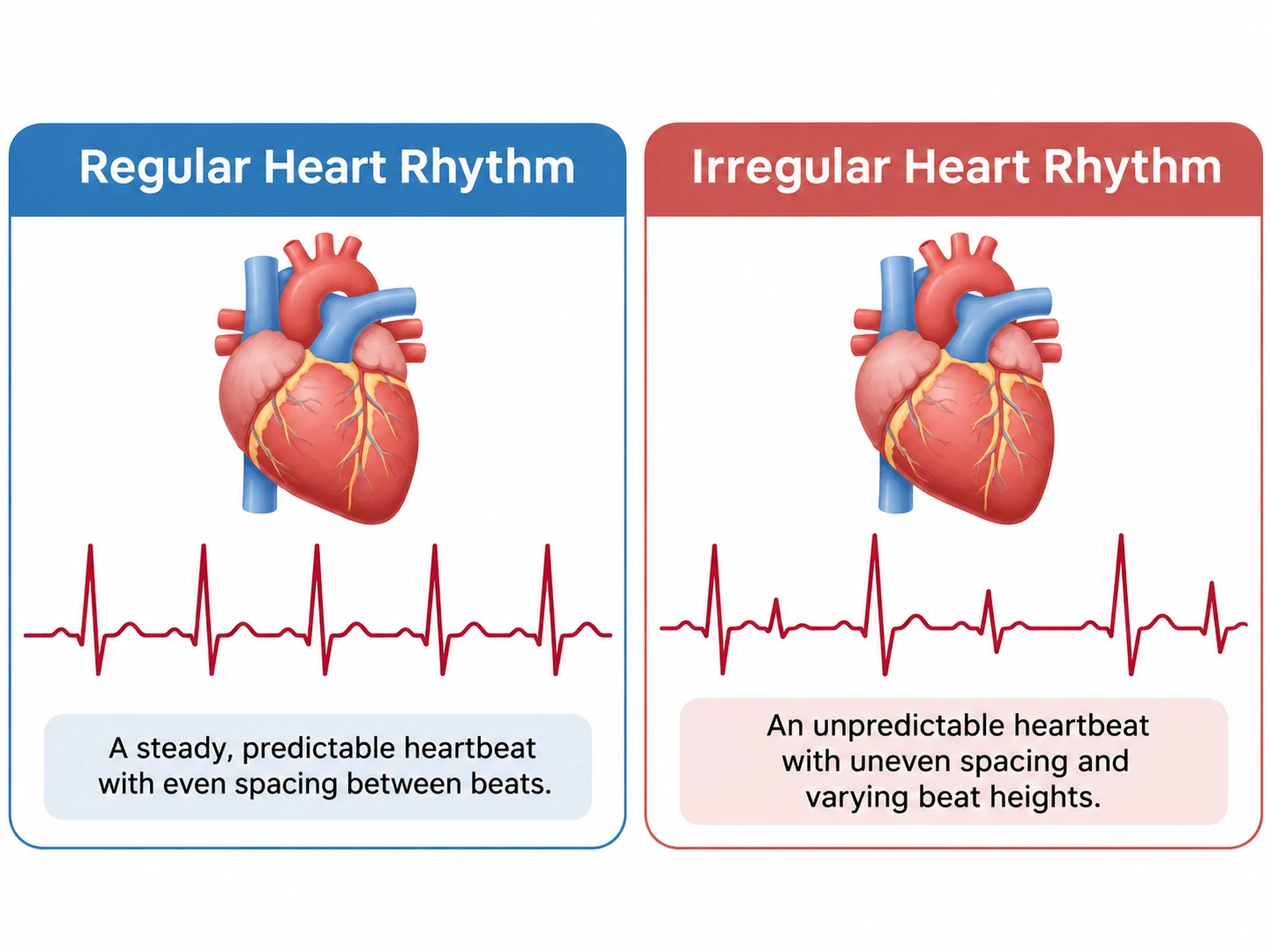
It is also important to separate the sensation of palpitations from an objectively measured abnormal heart rhythm. You can feel palpitations while your heart rhythm is entirely normal, and you can have an abnormal rhythm without feeling anything. Palpitations therefore do not automatically mean a heart rhythm disorder, and a normal-feeling heartbeat does not guarantee a normal rhythm.
Common Palpitations Causes: Why Does Your Heart Race?
The heart speeds up in response to many signals from the body. Below are the more common reasons, starting with the most frequent.
Stress and Anxiety
During stress, fear or a panic episode, the body releases adrenaline and related hormones. These raise the heart rate and the force of each beat, so the heartbeat becomes noticeable. Anxiety-related palpitations can occur even when the heart itself is healthy.
Caffeine and Stimulants
Coffee, tea, cola and energy drinks contain caffeine, and nicotine from cigarettes or other tobacco products is also a stimulant. Some cold and cough preparations and a few supplements contain stimulant ingredients. In sensitive people, even modest amounts can bring on a rapid or irregular heartbeat.
Lack of Sleep and Fatigue
Poor sleep and physical exhaustion keep the body's stress response switched on and can make the heartbeat more noticeable. Late-night work, irregular shift patterns and long periods of poor sleep are common backgrounds to recurring palpitations.
Dehydration
When the body loses fluid through heat, sweating, vomiting or diarrhoea, blood volume falls and the heart may beat faster to maintain circulation. Fluid loss can also disturb blood salts such as potassium and magnesium, which help control the heart's electrical activity.
Fever and Illness
Fever, infections and other illnesses increase the body's demand for oxygen, so the heart rate rises. A fast pulse during a viral fever is common, but a heartbeat that stays fast or irregular after you recover should be checked.
Anaemia and Thyroid Problems
In anaemia, the blood carries less oxygen, so the heart works harder and may beat faster. An overactive thyroid (hyperthyroidism) speeds up the body's metabolism and can cause a racing heartbeat, tremor, weight loss and heat intolerance. Both can be identified with simple blood tests.
Medication-Related Palpitations
Some prescription medicines, over-the-counter preparations such as decongestants, and certain asthma inhalers can raise the heart rate. Too high a dose of thyroid replacement can do the same. Check the patient leaflet, and tell your doctor about everything you take. Please do not stop or change any prescribed medicine on your own; discuss it with your doctor first.
Heart Rhythm Disorders
Sometimes palpitations come from the heart's own electrical system. Examples include:
- Supraventricular tachycardia (SVT): episodes of a suddenly fast, usually regular heartbeat.
- Atrial fibrillation: an irregular and often fast rhythm from the upper chambers.
- Premature atrial contractions (PACs): early beats from the upper chambers, often felt as a skipped beat.
- Premature ventricular contractions (PVCs): early beats from the lower chambers, felt as a thump or pause.
- Other clinically significant arrhythmias, some of which can reduce blood flow to the body.
You cannot identify these conditions from symptoms alone. Many extra beats are harmless, while some rhythm problems need treatment. Only a doctor, usually with an ECG or rhythm recording, can tell them apart.
Heart Racing for No Reason: What Could It Mean?
Many people say, "My heart starts racing for no reason." In practice there is often a trigger that is easy to miss, such as a poor night's sleep, a strong cup of tea hours earlier, mild dehydration or a stressful thought you were not consciously aware of. Equally, a heart racing for no reason can reflect an intermittent rhythm problem that starts and stops on its own.
Episodes can begin while sitting, resting, walking or even during sleep. Because they come and go, a person may feel completely normal by the time they reach a clinic, and a heartbeat that is normal between episodes does not exclude an intermittent rhythm problem.
Recurring, unexplained episodes deserve medical assessment. This is not a reason for alarm, but it is a reason not to simply wait and wonder. Until your appointment, it helps to keep a short diary:
- the date and time of each episode and how long it lasted;
- what you were doing and whether you had caffeine, alcohol, a heavy meal or a poor night's sleep;
- whether it started and stopped suddenly or built up and faded slowly;
- any other symptoms, such as dizziness, breathlessness or chest discomfort;
- your pulse or smartwatch reading, if you took one (useful to share, but not a substitute for a clinical ECG).
Irregular Heartbeat Symptoms You Should Know
The following irregular heartbeat symptoms are commonly reported:
- fluttering in the chest;
- skipped or extra beats;
- a pounding heartbeat;
- a sudden rapid heartbeat;
- an unusually slow heartbeat;
- dizziness or light-headedness;
- unusual tiredness;
- breathlessness;
- chest discomfort;
- fainting or near-fainting.
Symptoms vary a great deal from person to person. Some arrhythmias cause no noticeable symptoms and are found only during a routine ECG. Equally, symptoms alone cannot confirm a particular rhythm disorder, because several different conditions can feel alike. That is why recorded evidence of the heart rhythm is so valuable.
Palpitations Anxiety or Heart Problem: How Are They Different?
The question of palpitations anxiety or heart is one of the most common patient concerns, and the honest answer is that it is hard to tell apart without assessment.
During anxiety or a panic episode, adrenaline makes the heart beat faster and harder. This can produce a pounding, racing heartbeat even when the heart is structurally normal. Cardiac rhythm problems such as SVT can produce very similar sensations, sometimes along with a feeling of fear that looks like anxiety.
For this reason, anxiety should not automatically be assumed to be the cause of unexplained palpitations, especially when episodes are recurring, start suddenly, occur at rest or come with dizziness or breathlessness. Anxiety and a heart rhythm condition can also coexist, and each can make the other feel worse. There is no reliable home checklist that separates the two. A medical assessment, often with an ECG and sometimes a rhythm recording, can clarify matters and also reassure you if the heart turns out to be healthy.
When to Worry About Palpitations?
Knowing when to worry about palpitations is easier when you look at the other symptoms that come with them. Seek medical attention for palpitations that come with:
- chest pain or pressure;
- severe breathlessness;
- fainting or near-fainting;
- significant dizziness;
- a sudden rapid heartbeat with weakness or collapse;
- episodes that are becoming more frequent, longer or persistent;
- new palpitations in someone who already has heart disease.
If you have none of these emergency signs, but the palpitations are new, recurring, unexplained or linked to exertion, you should still arrange a timely medical assessment. Brief, occasional episodes that settle quickly and have an obvious trigger often need no tests. For help distinguishing a heart-related chest symptom from simple gas, see our article on chest pain or gas: when discomfort needs a cardiologist .
When Should You Get an ECG for Palpitations?
An electrocardiogram (ECG) is a quick, painless test. Small sticky electrodes are placed on the chest, arms and legs, and the machine records the heart's electrical activity as a trace on paper or screen. It shows the heart rate and rhythm at the time of the test and can reveal some rhythm abnormalities, conduction problems and other cardiac findings.
An ECG is often the first test advised for recurring palpitations. If an episode is happening during the recording, it may capture the rhythm directly. However, if palpitations come and go, the ECG performed between episodes can look completely normal. A normal ECG therefore does not rule out every intermittent rhythm disorder or every cardiac condition. Your cardiologist will decide whether further testing is needed, based on your history, examination and the ECG itself. You can read more about ECG and heart rhythm assessment on the clinic's website.
Holter Test for Palpitations: When Is 24-Hour Monitoring Needed?
A Holter monitor is a small, portable recorder connected to chest electrodes. It records the heart's electrical activity continuously while you go about your normal day, including work, walking, meals and sleep. A typical 24-hour Holter test involves fitting the device at the clinic, keeping a symptom diary, avoiding getting the device wet and returning it the next day so the recording can be analysed.
This kind of monitoring is useful when palpitations are intermittent, because it gives far more chances to catch an episode than a few minutes on an ECG couch. When you note the time of your symptoms, the doctor can compare them with the rhythm recorded at that moment, which helps link the sensation to the actual heartbeat.
The right monitoring duration depends on how often symptoms occur and on the doctor's assessment. Daily episodes may be captured in 24 to 48 hours. If episodes are rare, a longer-duration ambulatory ECG or an event recorder that you activate when you feel symptoms may be considered. Holter monitoring does not detect every heart problem, and it cannot guarantee a diagnosis, especially if no symptoms occur while you are wearing it.
The centre's page on Holter monitoring services describes the test in more detail.
ECG vs Holter Test: What Is the Difference?
| Feature | Resting ECG | Holter Monitoring |
|---|---|---|
| Recording duration | Short recording | Continuous recording over the prescribed period |
| Main purpose | Assess heart rhythm at the time of testing | Observe heart rhythm over a longer period |
| Best suited for | Detecting abnormalities present during the recording | Investigating intermittent rhythm symptoms |
| Activity monitoring | Usually performed at rest | Records during normal daily activities |
| Duration | Usually a few minutes | Commonly 24–48 hours, depending on the prescribed monitor |
| Clinical decision | Based on initial assessment | Based on symptom frequency and clinical need |
In simple terms, a resting ECG is a snapshot, a Holter test is a longer recording, and longer-term event monitoring is used when symptoms are too infrequent for either. Neither test is automatically suitable for everyone. Your cardiologist chooses the investigation based on your symptoms and clinical findings.
How Does a Cardiologist Evaluate Heart Palpitations?
The evaluation usually follows a logical sequence. Not every patient needs every step:
- Detailed symptom history, including what the palpitations feel like and how they start and stop.
- Frequency and duration of episodes.
- Possible triggers and associated symptoms.
- Medical and family history, including any family history of rhythm problems or sudden cardiac death.
- Blood pressure and pulse examination.
- ECG to record the rhythm at the time of the visit.
- Holter monitoring, if symptoms are intermittent or an ECG is not conclusive.
- Blood tests where appropriate, such as thyroid function, blood count and electrolytes, through laboratory services .
- 2D echocardiography when the structure and pumping of the heart need to be assessed.
- Additional cardiac investigations when the findings call for them.
The tests chosen depend on the clinical situation. Many people are reassured after a few simple steps. You can read about the centre's approach to cardiac evaluation and heart tests and its page on arrhythmia and irregular heartbeat care .
Who Is at Higher Risk of Heart Rhythm Problems?
Some factors make rhythm problems more likely:
- existing heart disease;
- high blood pressure ;
- diabetes;
- thyroid disorders;
- older age;
- a family history of certain rhythm conditions or sudden cardiac death;
- a previous heart attack or cardiac surgery;
- certain medicines and stimulant use;
- imbalances in blood salts (electrolytes);
- sleep apnoea, which is also linked with atrial fibrillation.
Having a risk factor does not mean you will develop a rhythm problem, and people without any recognised risk factors can also have arrhythmias. Managing blood pressure, blood sugar and thyroid conditions, and taking prescribed medicines, helps lower overall cardiac risk.
Consulting a Heart Specialist in Rajajinagar Bangalore
If you are looking for a Heart Specialist in Rajajinagar Bangalore, a heart doctor Rajajinagar residents can reach conveniently, or a cardiologist in Rajajinagar, Dr. Sandeep's Heart Care Center & Labs is located in neighbouring Basaveshwaranagar, near Shankar Matt Signal . The website lists Dr. Sandeep Shankar as a Senior Interventional Cardiologist and Heart Specialist (MBBS, MD, DM Cardiology, FSCAI, FIC).
For palpitations, the centre lists these relevant services: ECG , 2D echocardiography , treadmill testing (TMT), Holter monitoring, ambulatory blood pressure monitoring and laboratory tests. An ECG assesses rhythm at the time of the visit, Holter monitoring records rhythm over a longer period, an echocardiogram looks at the structure and function of the heart, a TMT may be considered if palpitations occur during exertion, and blood tests can look for causes such as anaemia or thyroid disease. Not every patient needs all of these; your cardiologist will decide after reviewing your history. You can read about cardiology consultation with Dr. Sandeep Shankar or learn more about the heart care centre .
Address: No. 70, 1st Cross, Siddiah Puranik Road, near Shankar Matt Signal, Basaveshwaranagar, Bengaluru – 560079. Appointments: +91 9620203065 Secondary: +91 9449444446 Contact Dr. Sandeep's Heart Care Center
A suspected heart attack or any serious emergency symptom needs immediate emergency medical assistance, not a clinic appointment.
How to Reduce the Risk of Recurrent Palpitations
These measures may help if your doctor has found lifestyle-related triggers. They do not guarantee prevention and cannot replace medical treatment:
- Drink enough fluids, especially in hot weather or during illness.
- Keep a regular sleep schedule.
- Reduce caffeine if you notice it triggers symptoms.
- Avoid tobacco and nicotine.
- Avoid excess alcohol.
- Manage stress through healthy practices such as relaxation exercises, walking or talking to someone you trust.
- Stay physically active, following your doctor's advice about the right level.
- Take prescribed medicines as advised.
- Keep blood pressure, diabetes and thyroid conditions under control.
- Attend your recommended follow-up reviews.
Conclusion
Palpitations are common, and the usual palpitations causes include stress and anxiety, caffeine and other stimulants, poor sleep, dehydration, fever, anaemia, thyroid disease, medicines and, less often, an abnormal heart rhythm. Recurring or unexplained palpitations should not automatically be put down to anxiety, nor should they be assumed to be dangerous. After a medical assessment, an ECG may be advised first, and a Holter test may be considered when episodes are intermittent.
If you have recurring symptoms, a cardiology consultation is a sensible next step. A Heart Specialist in Rajajinagar Bangalore search will lead you to several options; you may consult Dr. Sandeep Shankar at Dr. Sandeep's Heart Care Center & Labs for an individual assessment.
Disclaimer: This article is for general education and does not replace individual medical advice, diagnosis or treatment. Please consult a qualified doctor about your own symptoms. Sources are listed in section 14 and should be published as a "Sources" list under the article.
.webp)
.png)