
When Should You See a Cardiologist? Symptoms, Risk Factors and What to Bring
A cardiologist is a doctor who diagnoses and manages conditions of the heart and blood vessels. You should see one when you have symptoms such as chest discomfort, breathlessness on ordinary activity, recurring palpitations, fainting or leg swelling, when your blood pressure stays high, when a test such as an ECG is abnormal, when you already have heart disease, or when several risk factors add up. If you think you may be having a heart attack, do not wait for an appointment: call 112 (the national emergency number) or 108 for an ambulance in Karnataka.
Most people who ask when to consult a cardiologist in Rajajinagar, or anywhere else in Bengaluru, are not in an emergency. They have a symptom that keeps returning, a high reading on a home blood pressure monitor, or a report they do not fully understand. This guide helps you sort those situations: what needs emergency care, what needs a prompt appointment, and what can be handled through a routine consultation. It also lists what to bring so that your visit is useful.
Not every chest twinge or skipped beat means heart disease. Many symptoms have harmless causes. The point of assessment is to find out which is which.
What Does a Cardiologist Do?
A cardiologist assesses symptoms, orders and interprets heart tests, makes or excludes diagnoses, and manages long-term cardiovascular care. Common areas include:
- Coronary artery disease, where the arteries supplying the heart muscle become narrowed.
- Angina and other chest discomfort that may be heart-related.
- High blood pressure and the cardiovascular risk that comes with it.
- Palpitations and irregular heart rhythms.
- Breathlessness that may have a cardiac cause.
- Heart failure and its symptoms, such as swelling and fatigue.
- Abnormal ECGs or other cardiac test results.
- Prevention, follow-up and monitoring of established cardiovascular disease.
Assessment does not assume the worst. A cardiologist's first task is to work out whether your symptoms come from the heart at all. Digestive, muscular, lung and anxiety-related causes are common, and a good evaluation considers them too. If you want an overview of the conditions the centre evaluates, see its page on cardiac treatment options.
Symptoms to See a Cardiologist For
The symptoms to see a cardiologist for are those that may point to the heart, blood vessels or heart rhythm. What matters is not only the symptom but its pattern: when it starts, how severe it is, how long it lasts, what brings it on, and what else happens at the same time.
Chest Pain, Pressure or Tightness
Chest discomfort may come from coronary artery disease, but also from acid reflux, muscle strain or anxiety. People describe heart-related discomfort as pressure, squeezing, heaviness, tightness or even burning. It often appears with exertion and eases with rest (a pattern typical of angina), though a heart attack can also begin at rest.
Treat the following as emergencies, not reasons to book a routine appointment: sudden, severe or persistent chest discomfort; discomfort spreading to the arm, shoulder, back, neck, jaw or upper abdomen; or chest symptoms with breathlessness, cold sweat, nausea, light-headedness or fainting [2][3]. Our existing guide, Chest Pain or Gas?, explains why acidity and heart pain can feel alike.
Breathlessness During Everyday Activities
Getting short of breath while walking on level ground, climbing stairs or doing routine chores deserves assessment when it is new, getting worse, or comes with chest discomfort, faintness or unusual tiredness. Breathlessness has many causes, including anaemia, lung disease, weight gain and poor fitness, as well as heart conditions. Assessment sorts these out.
Palpitations or an Irregular Heartbeat
People describe palpitations as racing, pounding, fluttering or skipped beats. Occasional palpitations are common and often harmless, triggered by caffeine, stress, fever or poor sleep. Persistent or recurring episodes should be checked. Palpitations with chest pain, severe breathlessness, fainting or collapse need emergency attention [4].
Dizziness, Fainting or Unusual Fatigue
One-off dizziness after standing quickly or skipping a meal is common. Repeated dizziness, unexplained fainting, or fatigue that is out of proportion to your activity is worth assessing, especially if it occurs along with palpitations, breathlessness or chest symptoms. These symptoms do not always indicate heart disease, but a rhythm or blood-pressure problem is one of the possibilities to exclude.
Swelling in the Legs or Breathlessness When Lying Down
Swollen ankles or legs, or needing extra pillows because breathing is harder when lying flat, can sometimes signal fluid retention linked to heart failure [8]. Kidney, liver, vein and medicine-related problems can cause similar swelling. Arrange a timely clinical assessment; seek emergency care for sudden or severe difficulty in breathing.
High Blood Pressure: When Should You See a Cardiologist?
High blood pressure usually causes no symptoms, which is why it is called a silent condition. A normal-feeling day tells you nothing about your readings, so regular measurement matters.
Not everyone with high blood pressure needs a cardiologist. A general physician can confirm the diagnosis, check for related conditions and start treatment in many cases. A high BP cardiologist consultation becomes more appropriate when:
- Readings are repeatedly high on proper measurements.
- Blood pressure remains high despite prescribed treatment.
- You also have diabetes, kidney disease, known heart or vascular disease, or other significant risk factors.
- A routine health check shows abnormal readings or an abnormal ECG.
- Your doctor feels cardiovascular assessment or specialist management is needed.
A very high reading needs prompt action. If a home reading is around 180/120 mmHg or higher, rest for a minute or more and measure again. If it stays that high, contact a doctor promptly. If it comes with chest pain, breathlessness, weakness or numbness, vision changes, difficulty speaking or back pain, call emergency services immediately [1]. Do not change or skip prescribed medicines on your own; sudden changes can themselves be dangerous.
For background on treatment, see the centre's high blood pressure page.
Cardiologist or Physician: Whom Should You Consult First?
The cardiologist or physician question has no single answer. A general physician is often the right first stop for non-emergency concerns. They can assess common conditions, review risk factors, order first-line tests and refer you to a cardiologist when indicated. A cardiologist evaluates suspected or established cardiovascular disease and decides whether further cardiac investigations or specialist management are needed. You do not always have to see a physician first, but you do not always need a cardiologist either.
| Situation | Appropriate next step |
|---|---|
| General health concerns without emergency symptoms | Consult a primary-care physician or general physician |
| Repeatedly elevated blood pressure | Arrange medical assessment; referral may be appropriate depending on the findings |
| Recurring palpitations or an abnormal ECG | Seek medical assessment; a cardiology consultation may be recommended |
| Known heart disease requiring ongoing monitoring | Follow the treating clinician's plan and cardiology review schedule |
| New chest discomfort triggered by exertion | Obtain prompt medical assessment; emergency assessment may be needed depending on symptoms |
| Suspected heart attack or severe acute cardiac symptoms | Seek emergency medical assistance immediately |
Heart Disease Risk Factors That May Warrant a Cardiology Consultation
Risk factors raise the likelihood of cardiovascular disease; they do not decide whether you have it. People with several risk factors at once benefit most from an individual risk assessment [7]. Relevant factors include:
- High blood pressure.
- Diabetes.
- High LDL cholesterol or other lipid abnormalities.
- Smoking or any tobacco use.
- Older age.
- A family history of premature cardiovascular disease (commonly a heart attack or heart disease in a father or brother before 55, or a mother or sister before 65).
- Obesity and physical inactivity.
- Existing cardiovascular disease.
- Previous abnormal cardiac investigations.
- Several of these occurring together.
People of South Asian origin tend to develop coronary artery disease earlier than many other groups, which is worth remembering when you take your family history [9]. Equally, younger people and those with no known risk factors can still develop heart disease, so new symptoms should never be dismissed on the grounds of age or fitness. Routine cardiac testing is not recommended for every healthy person; your clinician weighs your individual risk and current guidance before suggesting tests.
When Is Chest Pain or Another Heart Symptom an Emergency?
Seek emergency medical help immediately for:
- New, sudden, severe, persistent or unexplained chest discomfort.
- Pressure, squeezing, heaviness or tightness in the chest.
- Pain or discomfort spreading to the arms, shoulders, back, neck, jaw or upper abdomen.
- Breathlessness, cold sweating, nausea, light-headedness or fainting alongside possible cardiac symptoms.
- Sudden collapse or severe difficulty breathing.
- Symptoms during physical exertion, particularly with any of the signs above.
Heart attacks do not always look dramatic. Some people have only mild discomfort, breathlessness, nausea or unusual tiredness, and a few have almost no typical symptoms. This is reported more often in women, older adults and people with diabetes [2][3].
If you suspect a heart attack, call 112 or 108 straight away. Do not drive yourself to hospital. Do not wait to see whether the symptoms pass. Do not take an antacid to "test" whether it is gas. Do not book a routine appointment instead of calling for help. In hospital, doctors typically use repeated ECGs and blood tests such as cardiac troponin to confirm or exclude a heart attack [5].
When to Consult a Cardiologist in Rajajinagar
The right moment for when to consult a cardiologist in Rajajinagar is the same as anywhere in Bengaluru. A consultation is reasonable when:
- A physician recommends specialist assessment.
- Chest discomfort or other possibly cardiac symptoms need evaluation.
- Blood pressure is difficult to control.
- Palpitations recur or an abnormal rhythm is suspected.
- An ECG or other investigation shows an abnormality needing specialist review.
- You have established cardiovascular disease that needs follow-up.
- Several risk factors justify an individual cardiovascular risk assessment.
The decision depends on your symptoms, medical history, risk factors and earlier test results rather than on location.
For readers searching from Rajajinagar, one local option is Dr. Sandeep Shankar at Dr. Sandeep's Heart Care Center & Labs. The centre is in Basaveshwaranagar, not in Rajajinagar. Its website describes Dr. Sandeep Shankar as a Senior Interventional Cardiologist and Heart Specialist (MBBS, MD, DM Cardiology, FSCAI, FIC). Travel time depends on traffic and route, so call before setting out. You can read the cardiology consultation and clinic information, the page for cardiology patients travelling from Rajajinagar, or go to the contact and appointment page. The clinic does not list emergency or 24-hour services, so a suspected heart attack must go to emergency services and the nearest hospital with emergency facilities.
What to Carry to a Cardiologist Appointment
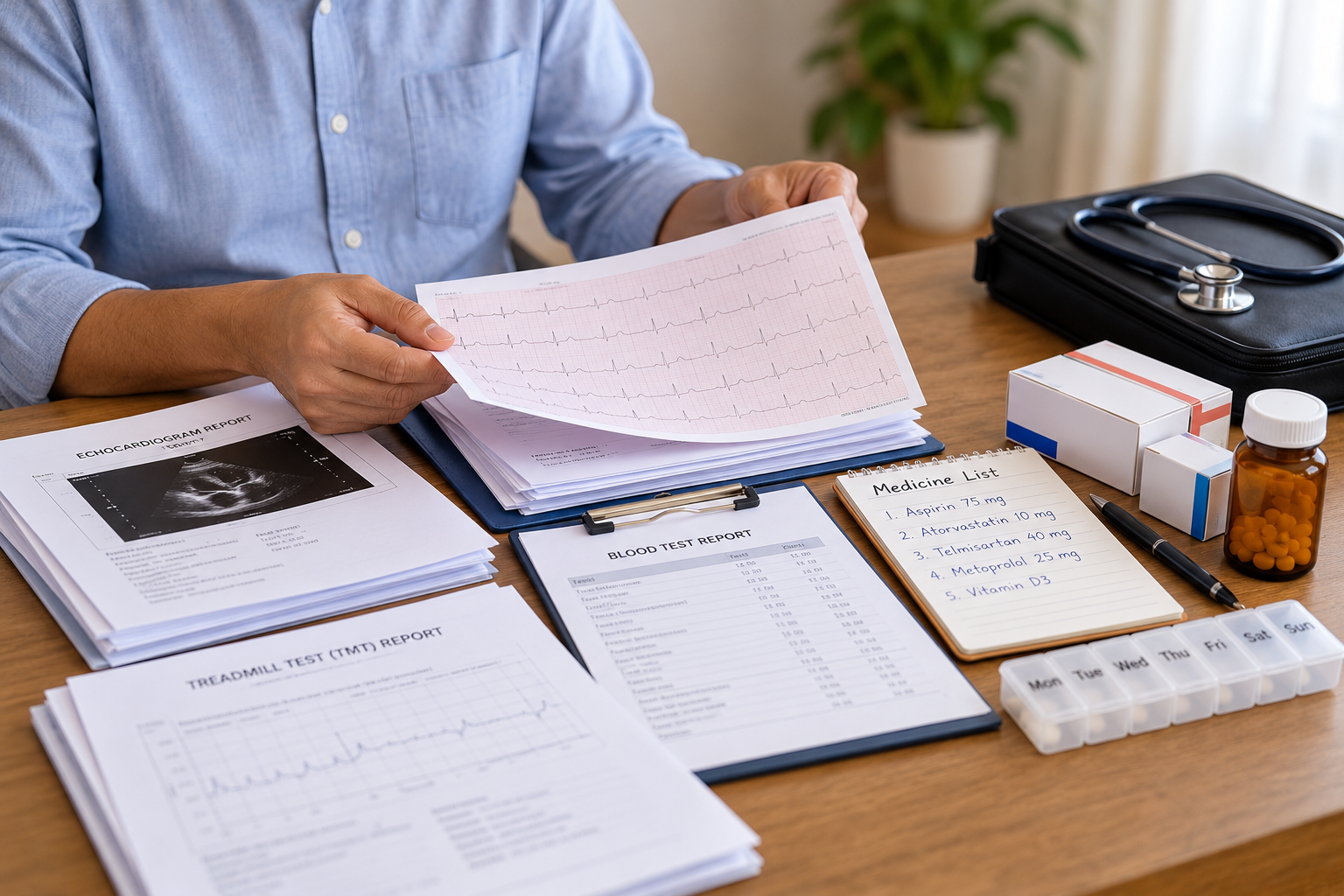
Knowing what to carry to cardiologist appointments saves time and gives the doctor the complete picture. Bring what you already have. Never delay urgent care to collect papers or arrange new tests.
Previous Medical Reports
- Previous ECG reports.
- Echocardiography (2D Echo) reports.
- Treadmill test reports.
- Holter monitoring reports.
- Blood tests, including cholesterol and blood glucose.
- Hospital discharge summaries.
- Relevant imaging or specialist reports.
Current Medication List
- Names and doses of all prescribed medicines (strips or the prescription are fine).
- Medicines you take regularly, including over-the-counter products and supplements.
- Known medicine allergies or earlier reactions.
Do not stop, change or start any medicine without medical advice.
Medical History and Blood Pressure Records
- Previous diagnoses and ongoing conditions.
- Recent blood pressure readings with dates and times, if you have them.
- Blood glucose readings, if relevant.
- Family history of early heart disease.
- Smoking or tobacco history.
- Earlier procedures or hospital admissions.
Symptoms and Questions to Discuss
- When the symptoms started.
- How often they occur and how long they last.
- Whether they happen during exercise, at rest or after meals.
- Associated symptoms such as sweating, dizziness or breathlessness.
- What seems to make them better or worse.
- Your questions about tests, medicines, follow-up and lifestyle.
A clear history helps the clinician, but it should never delay emergency treatment.
How Does a Cardiologist Evaluate Your Heart Health?
A typical consultation follows these steps:
- Review of your symptoms and medical history.
- Physical examination and blood pressure measurement.
- Assessment of cardiovascular risk factors.
- Review of current medicines and previous results.
- Further investigations only if the findings call for them.
Tests your cardiologist may consider include:
- ECG to record the heart's electrical activity.
- Blood tests, including cardiac troponin when a heart attack is suspected.
- 2D echocardiography to look at heart structure and pumping function.
- Treadmill testing (TMT) in selected patients after clinical assessment.
- Holter monitoring for rhythm problems that come and go.
- Other investigations when the clinical findings point that way.
Not every patient needs every test. Selection depends on symptoms, examination, individual risk and current medical guidance. A single normal ECG does not rule out every heart attack or serious cardiac condition; when an acute coronary syndrome is suspected, repeat ECGs, blood tests and observation may be necessary [5]. To learn more about the tests available at the centre, visit its cardiac evaluation and diagnostic tests page.
How to Prepare for Your First Cardiology Consultation
- Write down the main reason for your visit.
- Keep a record of symptoms and any blood pressure readings.
- Carry relevant earlier reports and your medication details.
- Note allergies and major medical conditions.
- Prepare questions about tests, treatment, follow-up and lifestyle.
- If a test is planned, follow the specific instructions the clinic gives you.
You do not need to fast or stop medicines before every appointment. Any such instruction depends on the test planned, and you should follow it only if the clinic or your doctor gives it.
Consulting Dr. Sandeep Shankar in Bengaluru
Dr. Sandeep Shankar consults at Dr. Sandeep's Heart Care Center & Labs in Basaveshwaranagar. According to the website, the centre provides ECG, 2D Echo, TMT and Holter monitoring, with in-house laboratory and radiology services. Listed consultation hours are 4:00 PM to 8:00 PM, and the clinic and lab run from 7:30 AM to 9:00 PM.
Address: No. 70, 1st Cross, Siddiah Puranik Road, near Shankar Matt Signal, Basaveshwaranagar, Bengaluru – 560079.
Appointments: +91 9620203065 or +91 9449444446.
Visit the official website or the contact page for details. A consultation helps assess your symptoms and decide on next steps; it cannot guarantee a particular diagnosis or outcome. Remember that suspected heart attack symptoms need emergency medical assistance, not a wait for an appointment at the centre.
How to Maintain Better Heart Health
No measure can promise complete prevention, but these habits support heart health for most people:
- Monitor blood pressure as advised.
- Check cholesterol and blood glucose when appropriate.
- Avoid smoking and tobacco.
- Follow a balanced, heart-healthy diet.
- Stay physically active in a way that suits your health and abilities.
- Take prescribed medicines as directed.
- Attend follow-up appointments.
- Discuss your individual cardiovascular risk with a qualified clinician [7].
Conclusion
A cardiologist may be needed for chest discomfort, breathlessness on ordinary activity, palpitations, fainting, leg swelling, hard-to-control blood pressure, abnormal tests, existing heart disease or several risk factors together. Noticing these signs early, and arriving with earlier reports and a current medicine list, makes the consultation more useful. Ultimately, when to consult a cardiologist in Rajajinagar depends on your symptoms, medical history and clinical risk, not on a fixed rule.
If you would like to explore services or ask about an appointment, you can review the centre's verified information and contact details on its official website. Emergency symptoms should never be managed by waiting for a routine consultation: call 112 or 108.
Disclaimer: This article is for general education and does not replace individual medical advice, diagnosis or treatment. Please consult a qualified doctor about your own health.
.webp)
.png)